

ETO Sterilization Machine: The Backbone of South India’s Healthcare Sector
South India has long been recognized as a hub of medical manufacturing, pharmaceutical production and hospital infrastructure. As healthcare standards continue to rise across the region, the demand for reliable sterilization solutions has grown in parallel. Among the various technologies deployed across hospitals and production facilities, the ETO sterilization machine has emerged as one of the most widely adopted tools for ensuring that medical instruments and devices meet the strictest safety protocols.
Ethylene oxide gas sterilization is particularly valued in settings where heat or moisture-based methods are unsuitable. The ETO sterilization process relies on ethylene oxide gas to penetrate packaging and complex device geometries, eliminating microbial contamination without degrading sensitive materials. This capability positions ETO gas sterilization as the preferred method for a wide range of medical products – from endoscopes and catheters to implantable components.
Across cities such as Coimbatore, Chennai, Kochi, Mysuru, Visakhapatnam and Madurai, the adoption of ETO sterilization machines has been expanding steadily. The convergence of medical device manufacturing clusters, expanding hospital networks and increasing regulatory compliance requirements has created both demand-side pressure and supply-side growth in this specific segment.
 CALL NOW
ETO Sterilization Process: How Regional Demand is shaped by Industry Requirements
The ETO sterilization procedure involves several critical phases – pre-conditioning, gas exposure, aeration and post-treatment validation. Each stage requires controlled environment chambers and precise monitoring. As medical device manufacturers in regions like Coimbatore’s industrial belt and Visakhapatnam’s pharma corridor expand capacity, the procurement of ETO sterilization machines that support full process validation has increased significantly.
Hospital sterilisers operating within South Indian cities are increasingly expected to meet ISO 11135 and related international standards. The ETO sterilization process methodology, when carried out correctly, delivers sterility assurance levels that align with global benchmarks. This regulatory alignment is pushing both private hospital chains and standalone diagnostic facilities toward investing in compliant ETO sterilizer machine setups rather than outsourcing sterilization services.
In Madurai and Mysuru, where secondary and tertiary care hospitals are scaling up surgical capacity, the demand for in-house sterilization infrastructure has grown considerably. Procurement teams in these cities are evaluating total cost of ownership – factoring gas consumption cycles, chamber volume, aeration timelines and compliance costs – when assessing ETO sterilizer price points for budgeting.
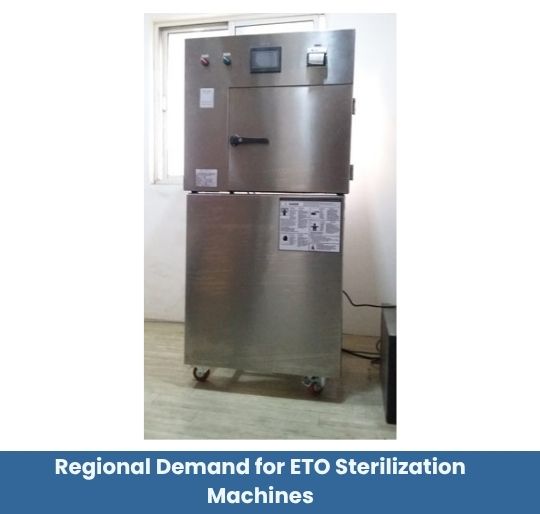
Sterilization Medical Devices: Supply Chain Dynamics across South Indian Cities
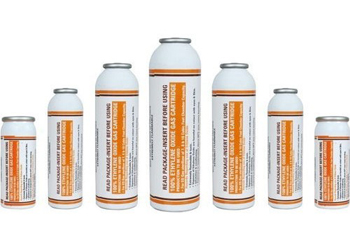
The supply of ETO sterilizer machines in South India is not uniformly distributed. Chennai remains the primary procurement gateway, with a dense network of medical equipment distributors, service engineers and import clearance infrastructure. However, secondary cities like Kochi, Coimbatore, Visakhapatnam and Madurai are increasingly establishing direct procurement channels – both for ETO sterilization machines and for associated consumables such as ethylene oxide gas cartridges and biological indicators.
Medical devices sterilization requirements in the region vary based on end-user category. Large multi-specialty hospitals with surgical volumes running into hundreds of procedures per day demand high-capacity ETO sterilizer machines capable of handling bulk loads. Smaller specialty clinics and diagnostic centers, on the other hand, look for compact medical sterilizer machine configurations that can be integrated within limited sterilization room footprints.
Manufacturers and authorized dealers catering to the South Indian market have responded by expanding their regional warehousing and service footprints. Kochi, in particular, has seen an uptick in authorized service centers for medical equipment sterilizer units, given the density of private hospitals and the growth of the city’s medical tourism sector. Similarly, Visakhapatnam’s growing healthcare infrastructure – anchored by government medical colleges and private hospital groups – has attracted several equipment suppliers who now maintain regional offices there.
The supply side also faces pressures related to lead times and after-sales support. Buyers in cities farther from Chennai – such as Mysuru in Karnataka or district-level hospitals across Telangana and Andhra Pradesh – often cite delayed service response as a key concern. This has created an opening for regional distributors to position themselves as full-service partners rather than transactional vendors.
ETO Sterilizer Price: Market Drivers and Procurement Patterns in South India
When healthcare institutions across South India evaluate capital expenditure for sterilization infrastructure, the ETO sterilization machine price is assessed within a multi-factor framework. Chamber capacity, automation level, gas recycling capability and compliance documentation requirements all influence the final procurement decision – often more so than the unit price alone.
Government hospitals and medical colleges in Tamil Nadu, Kerala, Karnataka and Andhra Pradesh frequently procure ETO sterilizer machines through tender processes governed by state medical services corporations. These tenders specify technical parameters closely aligned with the ETO sterilization process standards, ensuring that the awarded machines are capable of meeting hospital sterilization demands at scale. Private hospital chains, meanwhile, operate on a capital planning cycle that often involves multi-year equipment roadmaps – with sterilization capacity upgrades bundled into broader infrastructure expansion initiatives.
The sterilizer uses across these institutions span both reprocessing of reusable surgical instruments and the terminal sterilization of packaged single-use devices that arrive from contract manufacturers. This dual-use pattern influences machine selection criteria, with buyers often seeking EO sterilizer models capable of accommodating both short-cycle and extended-aeration protocols within the same chamber.
Facilities offering sterilization as a service to multiple smaller clients – including dental clinics, ophthalmology centers and orthopedic units – have emerged in cities like Coimbatore and Kochi. These facilities function as outsourced sterilization hubs, offering predictable turnaround times and documented sterility assurance, which smaller institutions find economically preferable to owning and maintaining their own ETO sterilization machine.
Our Other Product
Table Top ETO SterilizerHospital Sterilization Trends: Infrastructure Growth across Key South Indian Cities
Coimbatore has developed into a notable medical equipment manufacturing and procurement hub in Tamil Nadu. The presence of established hospital networks alongside a growing cluster of medical device SMEs has created layered demand – both for standalone hospital sterilization infrastructure and for production-grade ethylene oxide gas sterilization systems serving device manufacturers.
Kochi’s healthcare market, driven by a combination of domestic demand and medical tourism, places strong emphasis on accreditation and quality certification. Hospitals seeking NABH or JCI accreditation are required to demonstrate robust sterility assurance programs, which directly increases demand for documented medical sterilizers and validated sterilization medical devices processes. ETO sterilizer Suppliers in the Kochi market are therefore expected to offer not just equipment but also validation support documentation.
Mysuru, while smaller in scale, reflects a pattern common to Tier 2 cities across South India: rapid growth in private healthcare investment combined with limited local supply infrastructure for specialized sterility medical equipment. This creates a pricing and logistics gap that regional distributors are beginning to address through hub-and-spoke service models originating from Bengaluru.
Visakhapatnam presents a distinct demand profile given its position as Andhra Pradesh’s largest city and a growing center for pharmaceuticals and healthcare. The city’s pharmaceutical manufacturing base has a parallel need for ETO in sterilization applications – specifically for packaging and device components that require ethylene oxide gas sterilization before dispatch. This industrial-hospital convergence makes Visakhapatnam one of the more complex but promising markets for ETO sterilization machine vendors.
Madurai, as a medical destination for patients from across southern Tamil Nadu and northern Sri Lanka, has seen consistent growth in surgical volumes and associated sterilization demands. The city’s mix of government tertiary care centers and private hospital groups creates a segmented procurement environment where both high-volume and mid-capacity ETO sterilizer machines find viable customers.
Sterilization Benefits and ETO in Sterilization: The Case for Continued Investment
The broader sterilization benefits associated with ethylene oxide gas sterilization – material compatibility, deep penetration, low-temperature operation – remain foundational to its continued adoption across South India’s healthcare and device manufacturing sectors. Unlike newer modalities, EO sterilization process technology is deeply integrated into existing validation frameworks and regulatory expectations, making transitions to alternative methods costly and operationally complex for many institutions.
ETO sterilization uses span a broad product spectrum: single-use surgical kits, implantable devices, diagnostic equipment components, respiratory therapy products and more. As the breadth of devices classified under medical equipment sterilizer requirements expands – driven by increasing procedural complexity across hospitals – the range of applications for ETO sterilization machines in South India will continue to grow.
Regional medical device manufacturers in Coimbatore and Chennai, in particular, are investing in internal ETO sterilization capacity as a means of reducing dependence on third-party contract sterilization services. This vertical integration trend is expected to sustain demand for mid-to-large-scale ETO sterilization machine installations across the region well into the coming years.
 Email Us Now!
Conclusion
The demand and supply dynamics of EO sterilizer machines in South India reflect a maturing healthcare market that is grappling with the dual pressures of expanding clinical capacity and rising regulatory expectations. Cities like Coimbatore, Kochi, Mysuru, Visakhapatnam and Madurai are no longer peripheral procurement zones – they represent active and growing markets with specific infrastructure needs that the ETO sterilization sector must address with targeted supply strategies. As hospital sterilization protocols become more stringent and medical device manufacturing in the region scales further, the role of EO gas sterilization as a core modality within the sterility assurance ecosystem will only deepen, making it essential for equipment suppliers, hospital planners and policy stakeholders to align their investment and distribution frameworks with the region’s evolving requirements.