

The modern Cardiac Catheterization Lab (Cath Lab) is a marvel of medical engineering, but the sophisticated tools used within its walls present a unique challenge for infection control. In this environment, the ETO sterilization system stands as an indispensable guardian. Unlike general hospital wards, Cath Labs rely on intricate, heat-sensitive and multi-component instruments that would be ruined by traditional steam. This article explores how ETO sterilization technology provides the necessary precision to keep cardiac care both safe and effective.
The Critical Role of ETO Sterilization Uses in Cardiology
In the realm of heart health, the variety of ETO sterilization uses is vast. From diagnostic catheters to electrophysiology (EP) devices, the equipment is often composed of advanced polymers and delicate electronics. These materials are chosen for their flexibility and biocompatibility, but they are notoriously susceptible to thermal degradation.
The ETO sterilization process is specifically designed to address these vulnerabilities. By utilizing a low-temperature gas-based method, it ensures that the structural integrity of a catheter remains intact, while simultaneously achieving a Sterility Assurance Level (SAL) that protects the patient from post-operative infections.
Why the ETO Sterilization Machine is Non-Negotiable for Cath Labs?
A standard autoclave uses high-pressure steam to kill microbes, but for a cardiac stent or a balloon catheter, that steam acts as a destructive force. This is why the ETO sterilization machine is the centerpiece of specialized sterilization departments.
The ETO sterilization for medical devices used in cardiology must be thorough. Because catheters have long, narrow lumens (internal channels), the sterilant must be able to travel through tight spaces without losing its potency. ETO gas sterilization is unique in its ability to permeate through packaging and into the deepest recesses of complex surgical instruments, ensuring that no pocket of air remains unsterilized.
Understanding the ETO Sterilization Process and Cycle
The efficacy of an ETO sterilizer depends on a carefully orchestrated sequence of events. It is not as simple as “spraying” gas; it is a chemical reaction that requires specific atmospheric conditions within the ETO sterilization chamber.
- Pre-conditioning: The chamber is prepared with specific humidity and temperature levels.
- Vacuum & Injection: Air is removed to allow the gas to penetrate every surface.
- The Exposure Phase: The ETO sterilization system maintains the gas concentration for a set duration.
- Aeration: This is the most time-consuming yet vital stage. It ensures that any residual gas is safely removed from the medical products before they reach the surgeon’s hands.
This meticulous ETO sterilization method is what makes it the gold standard for ETO sterilization for surgical instruments that cannot be exposed to liquids or high heat.
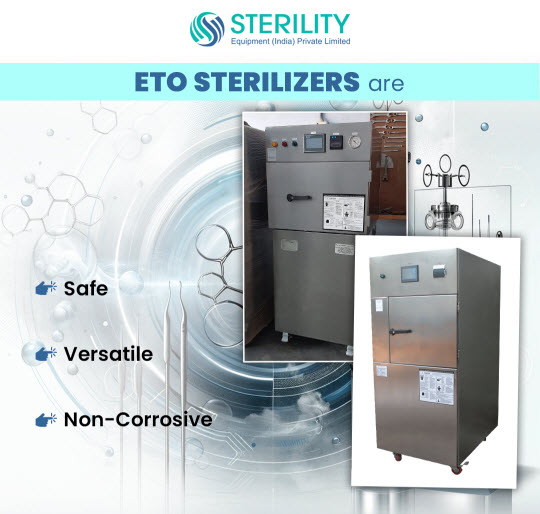
ETO Sterilization Equipment Features of High-Performance
When a facility looks to invest in ETO sterilization equipment, they aren’t just buying a box; they are investing in a safety-critical environment. Modern ETO sterilization technology has advanced to include:
- Automated Control Systems: Advanced PLCs that monitor the concentration of the gas in real-time.
- Safety Interlocks: Ensuring the ETO sterilization chamber cannot be opened until all gas has been safely evacuated.
- Environmental Scrubbers: Systems that neutralize the gas before it is exhausted, supporting ETO sterilization safety for the staff and the surrounding community.
For high-volume centers, an ETO sterilization plant setup might be necessary, where large batches of disposable medical products can be processed simultaneously to maintain a constant supply for daily cardiac procedures.
ETO Sterilization for Pharmaceuticals and Specialized Cardiac Implants
A growing segment of cardiology involves “combination products” – devices that carry a pharmaceutical payload, such as drug-eluting stents. ETO sterilization for pharmaceuticals is often the only way to sterilize these items. Gamma radiation can alter the chemical composition of the drugs and steam can melt the delivery mechanism.
The precision of a high-quality ETO sterilization system allows for the sterilization of these sensitive items without compromising the efficacy of the medication. This application highlights the versatility of the ETO sterilization uses in modern medicine.

Best Practices for ETO Sterilization in Hospitals
Implementing ETO sterilization in hospitals requires more than just the hardware. It requires a culture of safety. Because Ethylene Oxide is a potent chemical, the ETO sterilization safety protocols must be rigorous.
- Training: Staff must be well-versed in the ETO sterilization process.
- Monitoring: Regular use of biological and chemical indicators within the ETO sterilization chamber.
- Maintenance: Partnering with a reputable ETO sterilizer manufacturer for regular calibration of the sensors and seals.
By following these practices, a hospital can maximize the lifespan of their high-value cardiac instruments while ensuring the highest level of patient care.
Testimonial
“Excellent service and quality of machine ..”
Choosing the Right ETO Sterilizer Manufacturer
Selecting the right partner for your facility’s sterilization needs is a long-term decision. An ETO sterilizer manufacturer should provide not only the ETO sterilization machine but also the validation services required to meet international standards.
When evaluating ETO sterilization services or equipment providers, consider their track record with ETO sterilization for medical devices. Are their systems scalable? Do they offer the latest in aeration technology? A robust ETO sterilization system is an investment in the hospital’s reputation and the patient’s recovery.
 WhatsApp Us
The Future of ETO Sterilization Applications
As cardiac procedures become less invasive and the tools become even smaller and more complex, the demand for ETO sterilization applications will only grow. We are seeing a shift toward more compact, localized ETO sterilization equipment that can be placed closer to the point of care, as well as innovations in gas-recovery systems that make the ETO sterilization plant more sustainable than ever before.
Conclusion
The Cardiac Cath Lab cannot function without the certainty of sterile instruments. Through the use of the ETO sterilization system, healthcare providers can ensure that every catheter, stent and guide wire is free from microbial life without losing the delicate properties that make these tools effective. From the initial ETO sterilization process to the final aeration, this technology remains a cornerstone of modern cardiovascular medicine.