

ETO Sterilizers for Ukraine’s Hospitals: A Safe Low-Temperature Solution
Ukraine’s hospitals do not need a generic discussion about reprocessing. They need a focused answer for complex devices that cannot tolerate aggressive heat and still have to move safely through demanding clinical pathways. That is where the Ethylene Oxide Sterilizer enters the conversation. In tertiary centers, oncology units, surgical services and regional hospitals receiving mixed device inventories, low-temperature processing is less about preference and more about compatibility. The core issue is simple: many modern items used in sterilization medical devices programs include polymers, long internal channels, layered packaging and assembled components that do not respond well to one universal method. For Ukraine, the smarter question is not whether ETO should replace everything else, but where it should sit inside hospital reprocessing strategy for the loads that truly require it.
 Email Us Now!
Ethylene Oxide Sterilizer: Why Ukraine’s Device Mix Requires A Low-Temperature Route
An Ethylene Oxide Sterilizer becomes relevant when hospitals handle device categories that are technically difficult to process without material stress. In Ukraine, this challenge is sharpened by mixed procurement channels, imported device ranges and the need to support both high-volume centers and hospitals managing variable inventories. Ethylene Oxide Sterilization is especially suited to devices with narrow lumens, embedded plastics, adhesives and multiple joined materials that may deform or lose function under high temperatures. The discussion should stay anchored to clinical reality: fragile anesthesia accessories, catheter-based products, tubing assemblies and packaged sets that need deep penetration without damaging form or performance. Rather than treating ETO as a backup option, hospitals can define it as a dedicated route for problem loads that repeatedly fall outside steam compatibility. That approach gives reprocessing teams a clearer pathway, reduces uncertainty at load selection and supports safer handling of complex medical devices that are increasingly present in modern hospital care across Ukraine.
Sterility Equipment: Positioning ETO Inside Hospital Reprocessing Systems
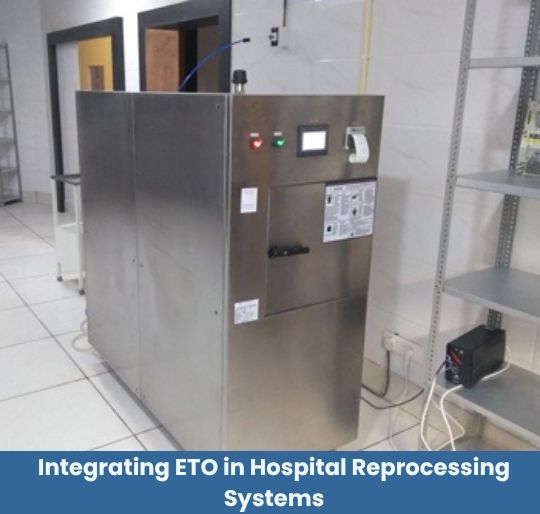
When hospitals evaluate Sterility Equipment, the key issue is how each technology fits into the central sterile workflow, not how impressive it appears in isolation. ETO should be considered as one element within a coordinated reprocessing system that also includes washer-disinfectors, packaging controls, release documentation and other medical sterilizers already in use. In Ukrainian hospitals, the strongest model is not duplication but separation by device compatibility. A dedicated EO Sterilizer line can absorb loads that are too delicate, too complex or too material-sensitive for high-heat processing. A thoughtful ETO position inside the CSSD makes load planning more disciplined, supports traceability and prevents low-temperature devices from being forced into unsuitable cycles. The result is a reprocessing structure that reflects the actual device mix rather than a one-method-fits-all routine.
Sterilizer Uses: Where Complex Medical Devices Create Real Workflow Pressure
The most important sterilizer uses in this topic are not broad or generic. They are tied to specific device types that repeatedly create reprocessing pressure in hospitals. In Ukraine, ETO sterilization uses become most relevant when departments rely on heat-sensitive items with internal channels, assembled plastics or sealed components that are hard to process consistently by other means. This is why an ETO sterilizer machine should be viewed through the lens of case mix rather than marketing claims. In referral and specialty care settings, reprocessing teams are not just handling simple stainless-steel tools; they are dealing with highly engineered products used in surgery, critical care, diagnostics and procedural medicine. EO Sterilization gives hospitals a route for those demanding loads without pushing them through methods that may compromise material integrity.
ETO Sterilization Procedure: Turning Validation into Daily Hospital Discipline
A strong ETO sterilization procedure is not defined by the machine alone. It depends on disciplined load preparation, compatible packaging, documentation, aeration control and release rules that staff follow every day. In Ukrainian hospitals, this matters because variability in workload can tempt teams to compress steps or blur device categories when turnaround pressure rises. That is exactly where ETO programs can fail if governance is weak. The right approach is to define acceptance criteria before the load enters the chamber, not after the cycle is complete. Items selected for ETO should be screened for material compatibility, packaging design, internal geometry and post-cycle handling requirements. Staff training must also focus on the parts of the workflow that are easy to overlook, especially segregation, labeling and the time discipline required after exposure. A well-run ETO sterilization process depends on process control, not assumption. In practice, Ukrainian hospitals need a repeatable routine that turns validated theory into reliable daily execution.
ETO Process Sterilization: Managing Lumens, Packaging and Residual Control
The value of ETO process sterilization lies in its ability to reach places that are difficult for other methods to address consistently, especially inside narrow channels, layered materials and assembled device pathways. That does not remove the need for caution. For Ukraine’s hospitals, the real operational focus should be on cycle design, load configuration and aeration discipline after ethylene oxide gas sterilization. Complex devices are not challenging only because of shape; they are also challenging because packaging density, lumen length and residual concerns affect whether a load is truly ready for release. A careful ETO gas sterilization program therefore requires hospitals to think in stages: preconditioning, exposure, post-cycle handling and final release after the appropriate aeration criteria are met. This is where ETO differs from quicker routines that may appear simpler on paper. Used correctly, it supports difficult device categories. Used casually, it creates risk. For Ukrainian facilities, the emphasis should remain on controlled execution rather than chasing speed.

Sterilization Medical Devices: Prioritizing the Loads That Matter Most in Ukraine
When hospitals discuss sterilization medical devices, the conversation should begin with prioritization. Not every item belongs in the ETO pathway and not every difficult item creates the same level of clinical urgency. In Ukraine, the best candidates are often devices with narrow internal passages, polymer-heavy construction or packaging structures that complicate other methods. Medical devices sterilization policy should identify these loads clearly so staff can avoid last-minute uncertainty at the point of reprocessing. Catheter-based products, certain tubing systems, procedure-specific kits and delicate components used in intensive care or specialized surgery often fit this profile. A low-temperature route is valuable here not because it sounds advanced, but because these are the items most likely to challenge standard hospital routines. ETO should therefore be treated as a targeted response to device complexity. The more precisely hospitals define that target, the easier it becomes to create a clean separation between general loads and those that genuinely require ETO handling.
Hospital Sterilization: Integrating ETO with CSSD Governance and Release Control
Effective hospital sterilization in Ukraine depends on governance as much as technology. An ETO line should not operate as a side room with its own unwritten habits. It must sit inside the same accountability framework that governs all sterile release decisions, including documentation, cycle records, staff roles and load traceability. This is especially important when hospitals already use multiple medical sterilizers and need consistent rules across methods. ETO works best when the hospital defines who authorizes load assignment, how cycle data are reviewed and what constitutes a releasable load after aeration. Procurement teams should also resist reducing the discussion to sterilization benefits or vendor language. What matters more is whether the method fits the hospital’s real device inventory and operational discipline. A robust ETO pathway strengthens the wider CSSD only when it is tied to policy, records and validated release control. In that setting, low-temperature sterilization becomes part of hospital governance, not a standalone technical claim.
Medical Equipment Sterilizer: Procurement Questions beyond Vendor Claims
Any medical equipment sterilizer purchased for this role should be assessed according to workflow fit, validation support, aeration capacity, documentation quality and compatibility with the hospital’s device mix. That is far more useful than centering the discussion on ETO sterilization machine price. For Ukrainian hospitals, cost matters, but price alone does not reveal whether a unit can support real operational needs across complex loads. A medical sterilizer machine for ETO service must fit staffing patterns, cycle scheduling, packaging practice and release procedures already in place. Decision-makers should also ask whether the vendor can support training, validation records, installation planning and integration with existing hospital sterilisers. An ETO platform that looks adequate on paper may still create bottlenecks if throughput, aeration workflow or documentation tools are poorly matched to hospital demand. The right procurement lens is clinical fit plus process control. That is how ETO for sterilization becomes a practical hospital solution rather than a narrow purchasing exercise.
Conclusion
For Ukraine’s hospitals, ETO sterilizer belongs in a carefully defined role: the low-temperature route for complex medical devices that cannot be reprocessed safely through harsher methods. The strongest case is not generic promotion but precise alignment with fragile materials, narrow lumens, mixed assemblies and disciplined release control. When hospitals position it inside CSSD governance, support it with a rigorous workflow and procure it according to actual device demand, EO sterilizer becomes a highly relevant answer for difficult loads. It should sit beside other methods, not compete with them blindly. In that targeted role, ETO sterilization helps Ukrainian hospitals manage complex device reprocessing with greater technical confidence and clearer operational control.