

The Role of ETO Sterilizers: Rising Demand for Sterile Medical Equipment in Middle East Zones
The geopolitical landscape of the Middle East, currently defined by the escalating tensions and direct military confrontations involving Iran, Israel and various neighboring territories, has created an unprecedented strain on regional healthcare infrastructures. As hospitals in conflict zones like Gaza, Southern Lebanon and Northern Israel face a surge in trauma cases, the necessity for a sterility medical device becomes a matter of life and death. In these high-intensity environments, the rapid turnover of surgical instruments and the reuse of complex medical hardware require robust solutions. This is where ethylene oxide gas sterilizers play a pivotal role, offering a reliable method to ensure that life-saving tools are free from microbial contamination despite the chaotic surroundings.
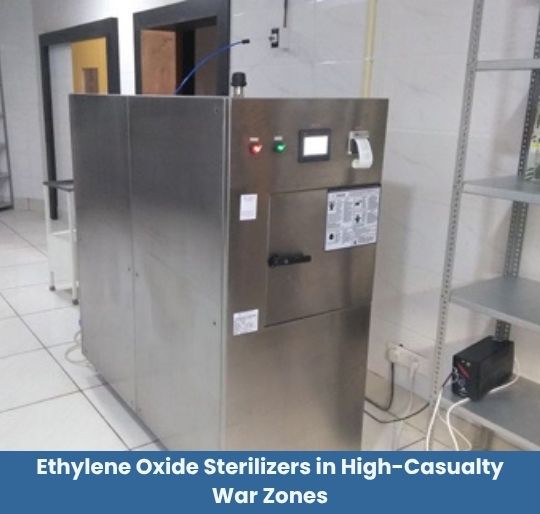
Ethylene Oxide Sterilizer Utilization in High-Casualty War Zones
In the current theater of war, the nature of injuries-ranging from shrapnel wounds to complex blast traumas-demands a constant supply of ready-to-use surgical kits. A standard sterilizer machine found in a peaceful municipal hospital often lacks the capacity or the specific chemical compatibility required for the sophisticated electronics and heat-sensitive plastics used in modern robotic surgery or cardiac monitoring. Consequently, an ethylene oxide sterilizer is favored because it operates at lower temperatures, preventing the degradation of expensive and hard-to-replace medical assets.
The logistical reality of the Middle East conflict means that supply lines are frequently severed. When a hospital sterilisation department cannot receive new shipments of disposable gowns or catheters, they must turn to internal processing. The ETO sterilization uses extend beyond just metal scalpels; they encompass the decontamination of delicate scopes and specialized tubing that would melt in a traditional steam autoclave. By maintaining a functional medical equipment sterilizer on-site, regional trauma centers can maintain a closed-loop system of equipment readiness, reducing their reliance on external humanitarian aid that may be blocked by blockades or active combat zones.
EO Sterilizer Integration in Mobile Field Hospitals
As the conflict spreads across different cities in the Middle East, the frontline of medical care has shifted from established urban hospitals to makeshift field units. Deploying an EO sterilizer in these mobile settings is a strategic necessity. These units are designed to handle the high-volume throughput of sterilizing hospital equipment under duress. Because many medical devices are now manufactured using polymers that cannot withstand moisture or high heat, the gaseous diffusion of ethylene oxide remains the gold standard for achieving total microbial eradication.
The operational focus for these field units is not just on cleaning but on ensuring the absolute medical device sterilization of orthopedic implants and neurosurgical tools. In a war scenario where secondary infections can be as lethal as the initial injury, the sterilization equipment must be foolproof. The use of an ETO instrument processing cycle ensures that even the most intricate internal lumens of a device are reached by the sterilant gas, providing a level of safety that is difficult to match with liquid chemicals or ultraviolet light in a dusty, high-tempo combat environment.
Ethylene Oxide Machine Deployment Amidst Regional Instability
The instability between Iran and Israel has led to a re-evaluation of how healthcare facilities manage their sterilization machine inventory. In cities frequently targeted by long-range strikes, the decentralization of hospital sterilization services has become a trend. Instead of one massive central processing department, hospitals are opting for multiple smaller ETO sterilization machine units placed in reinforced, underground sectors of the facility. This ensures that even if one part of the hospital is compromised, the ability to continue sterilizing machine operations remains intact.
Furthermore, the sterilizer uses in these zones have evolved. It is no longer just about routine surgery; it is about the mass processing of external fixators and respiratory equipment needed for victims of chemical or biological exposure, which are constant fears in a widening regional war. The ethylene oxide machine provides a versatile platform that can handle diverse loads, making it an essential asset for disaster preparedness.
Why the Middle East Depends on Imported ETO Sterilizers – and What It Means During War
Most countries in the Levant and the Gulf do not have a massive domestic manufacturing base for high-end sterilisation equipment. Consequently, the region is heavily dependent on imports. During active conflict, this dependency becomes a critical vulnerability. If an ETO sterilizer price fluctuates or if shipping lanes through the Strait of Hormuz or the Red Sea are closed, the ability to procure a new medical equipment sterilizer vanishes instantly.
This dependence means that the maintenance of existing units is paramount. Engineering teams in conflict zones often struggle to find spare parts for their ethylene oxide gas sterilizers, leading to a “cannibalization” of older machines to keep one or two running. The geopolitical tension forces ministries of health to stockpile these machines during brief windows of de-escalation, knowing that the next wave of conflict could cut them off from global markets for months or even years.

Opportunities for Indian Manufacturers in the Middle East Sterilization Market
India has emerged as a significant player in the production of affordable, high-quality sterilization equipment. As Western supply chains become entangled in the political complexities of the Middle East conflict, many regional providers are looking toward Indian manufacturers for an ETO sterilization machine. Indian firms offer a balance of technological sophistication and logistical proximity that is increasingly attractive.
For an Indian manufacturer, the current crisis presents a somber but significant market opening. The demand for an EO sterilizer that is rugged enough for the fluctuating power grids of a war-torn city is high. Indian-made hospital sterilisation units are often praised for their durability and ease of repair-features that are far more valuable in a conflict zone than high-tech, “smart” features that require a stable internet connection or specialized foreign technicians to calibrate.
How Regional Instability is Reshaping the Medical Equipment Import Market
The ongoing “shadow war” and its escalation into open strikes have fundamentally changed how sterilising machine units are purchased. Procurement officers in the Middle East are moving away from “just-in-time” delivery models toward “just-in-case” stockpiling. The market for medical device sterilization technology is seeing a shift where buyers prioritize immediate availability over long-term service contracts.
Instability also affects the insurance and shipping costs of an ETO instrument. Because these gases are volatile, shipping a high-capacity ethylene oxide machine through a war zone requires specialized handling and carries high risk. This has led to a rise in the localized assembly of sterilisation equipment, where the heavy components are sourced regionally and the specialized gas-handling cores are imported, effectively bypassing some of the most dangerous shipping hurdles.
ETO Sterilizer Demand in UAE, Saudi Arabia & GCC Amid Supply Chain Uncertainty
While the GCC nations like the UAE and Saudi Arabia are not currently direct combatants in the same way as other zones, they are the primary logistical hubs for humanitarian and military medical support. The demand for a high-grade ethylene oxide sterilizer in these countries has spiked as they bolster their domestic reserves to act as the “medevac” destination for the wider region.
In these stable but high-alert zones, the focus is on scaling up hospital sterilization capacity to handle potential spillover effects. The ETO sterilizer price is less of a deterrent for these wealthy nations compared to the risk of being caught without adequate sterility medical device infrastructure during a total regional blockade. They are investing heavily in automated sterilization machine arrays to ensure that their healthcare systems can absorb a sudden influx of thousands of patients from neighboring conflict zones without compromising the safety of their existing patient populations.
 WhatsApp Us
Sterilizer Uses in Post-Strike Recovery and Long-Term Trauma Care
The aftermath of missile strikes in urban centers creates a long-tail demand for sterilizing hospital equipment. Surgery is only the first step; the weeks of wound care and follow-up procedures that follow require a massive volume of sterile supplies. The ETO sterilization uses in this phase include the processing of specialized pressure-dressing components and orthopedic hardware that must be reused due to shortages.
Without a functioning medical equipment sterilizer, the risk of hospital-acquired infections (HAIs) skyrockets. In a war zone, an infection can be just as deadly as a bullet. Therefore, the EO sterilizer serves as a silent guardian of public health, ensuring that the limited medical resources available are not turned into vectors for disease. The ability to maintain a high standard of hospital sterilisation even when the power is intermittent and the water supply is tainted is what makes the gas-based sterilizer machine an indispensable tool in the modern Middle Eastern conflict.
Conclusion
The escalating conflicts in the Middle East have transformed the procurement of medical technology from a budgetary concern into a strategic defense priority. As the need for trauma care rises, the ethylene oxide gas sterilizer remains a foundational pillar of the healthcare response, ensuring that the sterility medical device requirements of modern medicine are met under the most grueling conditions. By securing robust sterilization equipment and diversifying supply chains through partners like India, regional healthcare providers can continue to offer life-saving interventions despite the surrounding instability. Ultimately, the role of the ETO sterilization machine is not merely industrial; it is a vital component of the humanitarian effort to preserve life amidst the chaos of war.