

Ethylene Oxide Sterilizer Load Configuration and Packaging Guidelines
When an ethylene oxide gas sterilizer completes its cycle and a sterility test fails, the first instinct is often to blame the machine or the gas concentration. In most real-world cases, however, the actual cause is something entirely preventable – poor load configuration or incompatible packaging. The physical arrangement of items inside the chamber, the permeability of the wrapping material, the orientation of each device and the amount of empty space between packages all directly determine whether ETO gas reaches every surface of every item. Understanding these variables is not optional; it is the foundation of reliable sterilization.
Ethylene Oxide Gas Sterilizers: The Science of Gas Movement inside the Chamber
Ethylene oxide gas does not behave like a liquid that floods a space uniformly. It is a gas that moves through concentration gradients – migrating from areas of high concentration toward areas of low concentration and penetrating packaging materials only when enough humidity and dwell time are present. Inside an ethylene oxide sterilizer, the gas must travel through the outer packaging, into any inner packaging or device lumens and make direct molecular contact with microbial DNA to achieve sterilization. Any physical barrier – a tightly compressed package, a stacked load with no air gaps or a non-permeable wrapping material – interrupts this pathway. The sterilizer machine delivers the gas, but the load configuration determines whether that gas actually reaches its target.
 Email Us
ETO Sterilizer Load Density: Why Overcrowding the Chamber Undermines Sterilization
EO sterilizers operate most effectively when the chamber is loaded to roughly 60–75% of its usable volume. Exceeding this threshold creates a fundamental problem: packages pressed tightly against each other create contact zones where gas circulation is blocked. These dead zones – areas of low ETO concentration – are where sterilization failures originate. Sterilization equipment for hospital use is engineered with precise chamber dimensions and gas injection points calibrated for a defined load volume. When that volume is exceeded, the gas distribution map the manufacturer validated during qualification testing no longer applies. This is particularly important for hospital steriliser machines processing mixed loads, where devices of different sizes and densities are combined. Heavier, denser items should be placed on lower racks; lighter, more porous packages should occupy upper positions where gas stratification is less pronounced.
Sterilization Equipment and Packaging Material Permeability: Choosing the Right Barrier
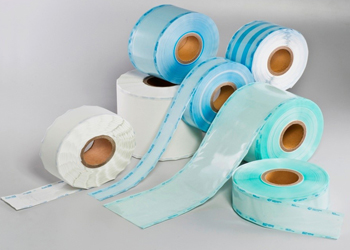
Not all packaging materials allow ETO and moisture to pass at the same rate. For ethylene oxide sterilization, packaging must be permeable to both gas and water vapor – the humidity preconditioning phase before gas injection depends on moisture reaching the item surface and ETO itself must diffuse inward and back out during aeration. Tyvek-coated pouches, medical-grade paper and validated sterilization rolls are the accepted options for EO sterilizers. Foil laminates, thick plastic films not rated for ETO uses and multi-layer barrier packaging designed for radiation sterilization will restrict gas diffusion to the point where internal surfaces are never adequately exposed. When using sterilization rolls and pouches, the paper or Tyvek side must face the direction of gas flow – typically upward or outward depending on rack orientation in the sterilizer machine. Double-pouching is sometimes used for aseptic presentation purposes, but every additional layer reduces diffusion efficiency, making the paper-to-paper orientation of nested pouches critical.

EO Sterilizer Device Orientation: How Position Affects Gas Access to Lumens and Cavities
For long-lumen devices – catheters, endoscopes, tubular instruments – orientation inside the ETO equipment is not a minor detail. A device positioned with its lumen parallel to the gas flow path will allow gas to enter from one end and exit through the other during concentration cycling. A device oriented perpendicular to gas flow or with one lumen end sealed against another package, may experience a stagnant column of air inside the lumen that resists full gas exchange. Standard guidance for sterility medical device packaging specifies that lumened devices should be coiled loosely or positioned with both open ends accessible to gas circulation. Flexible items should not be folded sharply, as tight folds create self-sealing zones where surfaces contact each other and exclude gas. Rigid trays containing multiple instruments should be positioned so that instrument tips do not nest inside hollows of adjacent instruments.
Ethylene Oxide Machine Load Configuration and Void Space Management
Void space – the empty volume between packages inside the chamber – functions as the gas circulation network of an ETO sterilizer load. Adequate void space allows gas and humidity to circulate, equalize in concentration and renew at the package surface throughout the dwell phase. A common mistake when loading a hospital sterilizer machine is filling visible gaps with small pouches or loosely wrapped items to maximize throughput. While this seems efficient, it collapses the circulation network and forces gas to reach some packages only by diffusion through adjacent packaging – a much slower and less reliable process. A practical rule used in validated load configurations is to maintain at least 2–3 cm of clear space between packages on the same shelf and to avoid stacking packages directly on top of each other without a rigid tray or grid separator providing airflow clearance. The ethylene oxide machine must be able to pull a vacuum, admit humidity and introduce gas in a way that reaches every surface – this only happens when void space is intentionally designed into the load.

Our Other Product
Industrial ETO Sterilizer MachineHospital Sterilization Load Qualification: Validating Configuration before Routine Use
No load configuration should be used in routine hospital sterilisation without first being validated with biological indicators (BIs) placed at the most challenging locations within the load. These locations are identified through challenge testing – placing in the geometric center of the densest package, inside lumen ends and at the load positions farthest from gas injection points. Sterilizing hospital equipment without this validation step means operating on assumptions that may not reflect actual gas penetration under the specific combination of packaging, load density and device geometry in use. ETO sterilizer manufacturers provide guidance on maximum load weights and configurations for each chamber size and these parameters form the basis of load qualification studies. Any change to packaging type, device configuration or load layout constitutes a new load that must be re-qualified before clinical use.
About Sterility Equipment India Private Limited
Sterility Equipment India Private Limited, based in Ahmedabad, Gujarat, is a certified manufacturer and exporter of ethylene oxide gas sterilizers, including table top, fully automatic and industrial ETO sterilizer models. Founded in 2014, the company serves hospitals, medical device manufacturers, tissue banks, research laboratories and surgical centers across domestic and international markets. Our sterilization equipment is designed to meet current compliance standards for ETO equipment performance, aeration and safety.
Conclusion
Reliable sterilization in an ethylene oxide sterilizer begins long before the cycle starts – it begins at the loading dock. Load density, packaging permeability, device orientation and void space management are not procedural preferences; they are the physical conditions that determine whether ETO gas reaches its microbicidal concentration at every surface inside every package. Hospitals and medical device facilities that treat load configuration as a validated, documented process – rather than an informal practice – are the ones that consistently achieve sterility assurance and protect patient safety.