

ETO Sterilizer Facilities in India: Regulations & Emission Control Technologies
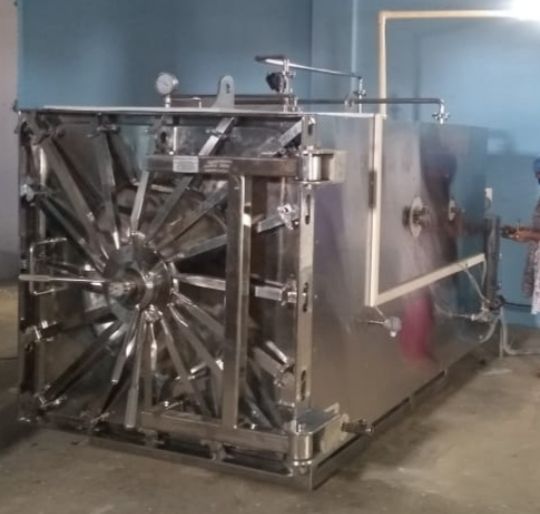
Ethylene oxide (ETO) is a highly effective sterilant used across healthcare, medical device manufacturing and life science industries. However, ETO is also a carcinogenic compound classified under hazardous air pollutants, making its emission management a regulatory and environmental priority. In India, facilities operating an ethylene oxide sterilizer must comply with a defined set of environmental standards governed by the Central Pollution Control Board (CPCB) and State Pollution Control Boards (SPCBs). Understanding these regulations is not optional – it is a legal obligation for every ETO sterilizer facility, whether a hospital sterilizer operation or a large-scale industrial sterilization equipment unit.
ETO Sterilizer Facilities and Its Classification under Indian Environmental Law
ETO sterilizer facilities in India are classified as Red Category industries under the CPCB’s industry categorisation framework, owing to their high pollution potential. This classification applies to both standalone ethylene oxide sterilizers used in hospitals and large-scale sterilization equipment for hospital use, medical device contract sterilisers and industrial ETO equipment manufacturers.
Any facility operating ethylene oxide sterilizers with a chamber volume above a threshold or processing a defined quantity of ETO gas annually must obtain Consent to Establish (CTE) and Consent to Operate (CTO) under the Water (Prevention and Control of Pollution) Act, 1974 and the Air (Prevention and Control of Pollution) Act, 1981. Additionally, facilities fall under the purview of the Environment Protection Act, 1986 and must adhere to the Hazardous and Other Wastes (Management and Transboundary Movement) Rules, 2016, for handling ETO gas cylinders and spent cartridges.
 Email Us!
ETO Sterilization Facilities: CPCB Norms and Emission Standards Applicable
The Central Pollution Control Board has established ambient air quality standards and stack emission limits that directly govern emissions from any ethylene oxide machine or sterilization equipment facility. Under the National Ambient Air Quality Standards (NAAQS) issued by CPCB, ethylene oxide is treated as a toxic volatile organic compound (VOC) and its ground-level concentration in surrounding areas must not exceed permissible thresholds.
For stack emissions from EO sterilizers, the applicable standard under the Environment Protection Act (Schedule I, amended notifications) generally requires that ETO concentration in stack exhaust must not exceed 1 ppm (parts per million) in the treated effluent gas before atmospheric discharge. Some state-level SPCBs, particularly in Gujarat, Maharashtra and Tamil Nadu, have imposed stricter facility-specific emission limits as a condition of CTO issuance, especially for sterilizer machine clusters located near residential zones.
Facilities using ethylene oxide gas sterilizers must conduct periodic stack emission monitoring, typically quarterly, using certified environmental laboratories empanelled with NABL (National Accreditation Board for Testing and Calibration Laboratories) or the respective SPCB. Monitoring records must be submitted as part of the facility’s compliance reporting.
ETO Sterilization Equipment in India: Scrubber System Requirements
The single most critical emission control requirement for any facility running an ethylene oxide sterilizer is the installation and operation of a validated scrubber system. CPCB guidelines and SPCB consent conditions mandate that ETO exhaust gases must pass through an acid scrubber or catalytic oxidation system before venting to atmosphere.
The standard wet scrubbing approach for EO sterilizers uses dilute sulfuric acid (H₂SO₄) or phosphoric acid to convert ethylene oxide gas into ethylene glycol – a relatively non-hazardous compound. The treated effluent must then be managed as per the Hazardous Waste Rules. Key design requirements include:
Scrubber Efficiency: The scrubber connected to sterilizing hospital equipment or industrial sterilization equipment must achieve a minimum destruction removal efficiency (DRE) of 99% for ETO.
Residence Time and Contact: Acid scrubbers must be designed for adequate gas-liquid contact time, typically through packed tower or venturi configurations.
Treated Water Disposal: Scrubber effluent containing ethylene glycol must be disposed of through a licensed effluent treatment plant (ETP) and cannot be discharged into open drains or municipal sewers without treatment.
Catalytic Thermal Oxidisers (CTOs): For larger industrial ETO sterilizer installations, catalytic thermal oxidation at temperatures between 300–400°C offers a more effective destruction pathway and is increasingly preferred by SPCB authorities as a Best Available Technology (BAT) option.
Facilities should note that scrubber malfunction or bypass is a serious non-compliance event. Regular maintenance logs, pressure drop monitoring and scrubber liquid pH records are typically required to be maintained on-site and made available during SPCB inspections.
Read Our Article
Role of ETO Sterilizers in Central Sterile Supply Departments (CSSD)Ethylene Oxide Machine: Aeration and Degassing Requirements
Beyond scrubber compliance, post-sterilisation aeration is another critical emission control step. After a sterilization cycle, sterilized medical devices retain residual ETO gas within their packaging. This residual gas, if not properly aerated, becomes a source of ambient ETO emissions inside the facility and also poses risks to end users.
CPCB and SPCB requirements mandate that aeration chambers used alongside ethylene oxide sterilizers must be ventilated through ducted exhaust systems connected to scrubbers. Aeration rooms must be equipped with continuous ETO gas monitors with audible alarms set at the Threshold Limit Value (TLV) of 1 ppm (as per ACGIH standards referenced by Indian occupational health norms under OSHA India guidelines).
Facilities must also comply with the Manufacture, Storage and Import of Hazardous Chemicals Rules, 1989, for ETO gas cylinder storage, requiring fire-rated storage areas, adequate ventilation, leak detection systems and emergency response plans.

ETO Sterilizer Compliance: Step-by-Step Regulatory Pathway in India
Achieving and maintaining environmental compliance for a sterilization equipment facility in India involves a structured series of steps:
Step 1 – Environmental Clearance and Consent: Before commissioning any ethylene oxide gas sterilizer setup, obtain CTE from the concerned SPCB. Facilities with a capacity above defined thresholds under the EIA Notification, 2006, may also require prior Environmental Clearance (EC) from MoEFCC (Ministry of Environment, Forest and Climate Change).
Step 2 – Pollution Control Infrastructure: Install SPCB-approved scrubber systems with documented design specifications. Submit engineering drawings and DRE calculations as part of the CTO application for the ETO equipment facility.
Step 3 – FORM V Submission: Under the Environment Protection Act, facilities must submit annual environmental compliance reports (FORM V) to the SPCB, covering stack monitoring data from the sterilizer machine operations, water usage and hazardous waste generation.
Step 4 – Occupational Health Compliance: As ETO is a Group 1 IARC carcinogen, facilities must comply with the Factories Act, 1948 and its state rules, including medical surveillance for workers exposed to ethylene oxide machines, biological monitoring for urinary ETO metabolites and personal protective equipment protocols.
Step 5 – Hazardous Waste Authorization: Obtain separate Hazardous Waste Authorization from the SPCB for storage, transport and disposal of spent ETO cartridges, used scrubber liquid and contaminated packaging materials generated during hospital sterilization operations.
Our Other Product
Table Top ETO SterilizerETO Sterilization Equipment Operators: State-Level Regulations and Its Impact
While CPCB sets baseline national norms, state-level SPCBs in key manufacturing and healthcare hubs exercise significant regulatory authority. Gujarat Pollution Control Board (GPCB), for instance, has issued facility-specific directions to sterilization equipment clusters in Ahmedabad’s GIDC zones, including requirements for online continuous emission monitoring systems (CEMS) for larger ETO facilities. Maharashtra Pollution Control Board (MPCB) has issued similar directives near Pune and Mumbai medical device sterilisation clusters.
Operators of hospital sterilizer machines and contract sterilisation facilities must therefore engage with their respective SPCB for facility-specific compliance conditions rather than assuming national norms are sufficient. Third-party environmental audits, conducted annually, are increasingly mandated as a condition of CTO renewal for ETO sterilizer facilities.
Sterility Equipment India Private Limited
Sterility Equipment India Private Limited, headquartered in Ahmedabad, Gujarat, is a DUNS-registered manufacturer and exporter of ethylene oxide gas sterilizers, fully automatic ETO sterilizers and industrial sterilization equipment. Established in 2014, the company serves hospitals, medical device manufacturers, tissue banks, research centres and life science facilities across India and international markets. With a commitment to delivering reliable, high-performance EO sterilizers built to current industry standards, Sterility Equipment India continues to support the healthcare and sterilisation sector with quality-driven engineering solutions.
Conclusion
Compliance with CPCB norms, SPCB consent conditions and emission control requirements is a non-negotiable operational responsibility for every ethylene oxide sterilizer facility in India. From scrubber system design and stack emission monitoring to hazardous waste authorisation and worker safety protocols, facilities running ETO sterilization equipment must build environmental compliance into their core operational framework – not only to meet legal mandates but also to protect community health, secure uninterrupted CTO renewals and uphold the credibility of India’s growing medical sterilisation industry.