

In the modern healthcare and medical manufacturing industry, sterility is not optional – it is the absolute foundation of patient safety. Among all sterilization technologies available today, Ethylene Oxide Sterilization (ETO Sterilization) remains the gold standard for heat-sensitive, moisture-sensitive and structurally complex medical devices such as catheters, surgical implants, endoscopes and multi-lumen instruments. The ability of EO gas to penetrate deep into materials, packaging and intricate geometries – without causing thermal damage – makes it irreplaceable in medical device sterilization.
Yet, for all its effectiveness, ETO Sterilization of complex medical devices comes with a specific set of challenges – from material compatibility and residue management to cycle validation and regulatory compliance. Understanding these challenges – and how the right ETO Sterilizer or EO Sterilizer can address them – is essential for medical device manufacturers, hospital procurement teams and sterilization facility operators.
Ethylene Oxide Sterilization: Why It Is the Method of Choice for Medical Devices
EO Sterilization works through a biochemical mechanism called alkylation. Ethylene oxide gas – a colourless, odourless compound – infiltrates the packaging and structural layers of a medical device and binds to the DNA and proteins of microorganisms, disrupting its biological functions and rendering them non-viable. This molecular-level action ensures complete sterilization of the medical device without requiring high heat or moisture.
For catheter sterilization, this is particularly valuable. Catheters – whether urological, cardiovascular or central venous – are typically manufactured from PVC, silicone, polyurethane or thermoplastic elastomers. These materials are sensitive to autoclaving and radiation. Similarly orthopaedic implants, bio-absorbable implants and soft-tissue repair meshes are often damaged or dimensionally altered by steam sterilization. An ETO Sterilization Machine preserves the structural integrity, flexibility, surface finish and functional coatings of these devices.
Beyond material compatibility, EO gas is uniquely capable of penetrating wrapped and packaged devices – meaning medical devices can be sterilized inside their final sealed packaging, ensuring sterility is maintained right up to the point of use.
Catheter Sterilization: Key Challenges in ETO Sterilization of Catheters
Catheters represent one of the most demanding categories in medical device sterilization. Their tubular geometry, thin walls, multi-lumen construction and varied coatings create several sterilization challenges:
Gas Penetration into Lumen Channels
Multi-lumen catheters have narrow internal channels that can trap microorganisms. Ensuring EO gas reaches every internal surface demands precise control of chamber pressure, gas concentration, humidity and exposure duration. The sterilization of medical instruments with lumen channels requires an EO Sterilizer capable of deep vacuum cycles that draw gas into the finest channels before the exposure phase begins.
Residue Management and Aeration
EO gas and its by-products – ethylene chlorohydrin and ethylene glycol – can remain adsorbed within polymer catheter materials after sterilization. Residue levels must be reduced to permissible limits as defined by ISO 10993-7 before the device can be safely used in the body. Proper aeration cycles within an EO Sterilization Machine or in a dedicated aeration chamber, are critical for catheter sterilization compliance.
Coating and Surface Integrity
Hydrophilic and drug-eluting coatings on modern catheters can be sensitive to elevated temperatures or humidity extremes. The sterilization cycle parameters must be calibrated to preserve these functional surfaces – which is why an advanced Medical Equipment Sterilizer offering controlled temperature and humidity conditions is essential for the sterilisation of medical devices in this category.
Implant Sterilization: Challenges of ETO Sterilization for Surgical Implants
Implant sterilization demands the highest level of sterility assurance, as implants are placed inside the body – often for extended periods. EO Sterilization is approved for a wide range of implantable devices, including orthopaedic bone screws and plates, cardiovascular stents, hernia mesh, spinal fixation devices and bio-absorbable sutures. However, implant sterilization via ETO presents its own specific challenges:
Sterility Assurance Level (SAL) Requirements
Implantable devices require a Sterility Assurance Level (SAL) of 10⁻⁶ – meaning no more than one in a million devices may carry viable microorganisms. Achieving this with EO sterilization demands rigorous bioburden testing, parametric control and batch documentation. An ETO Sterilizer with a full automation control system – one that logs every cycle parameter – is essential for implant sterilization validation and regulatory submission.
Dense Packaging and Tray Configuration
Surgical implant sets – such as orthopaedic trays containing multiple metallic and polymeric components – are typically packaged in dense configurations. The ETO Sterilization Machine must achieve uniform gas distribution throughout the load. Chamber design, load arrangement and pallet configuration all affect the uniformity of sterilization across complex implant sets.
Material Interaction with EO Gas
Bio-absorbable polymers used in resorbable implants – such as PLGA, PLA and PGA – may absorb EO gas differently compared to non-absorbable materials. The sterilization cycle must ensure adequate gas penetration while minimising material degradation. This makes material-specific cycle development a key step in implant sterilisation for each new device type.
Table Top ETO Sterilizer
The Table Top ETO Sterilizer is designed for hospitals, surgical clinics, nursing homes and specialty practice centres – including CATH Labs, ENT surgeons orthopaedic specialists and gynaecological care units. It is built from high-quality stainless steel and provides reliable EO sterilization for heat-sensitive instruments in a compact footprint. This Medical Equipment Sterilizer is suitable for Sterilize Medical Equipment that includes catheters, endoscopes and small implantable devices used in day-care procedures.
Our Other Product
Ethylene Oxide (ETO) Sterilization ProcessFully Automatic ETO Sterilizer
The Fully Automatic ETO Sterilizer brings complete process automation to medical equipment sterilisation. Key features for complex medical device sterilization include:
- An intelligent control panel that displays each sterilization phase – preconditioning, gas dwell, aeration – in real time.
- Automatic progression through vacuum, exposure and aeration cycles without manual intervention.
- Positive and negative pressure chamber design for thorough EO gas penetration into complex device geometries.
- Built-in Steam Generator providing controlled relative humidity for each sterilization cycle.
- Leak test function to verify chamber integrity before each cycle – critical for validated sterilization processes.
- Data logging to Pen Drive: a complete cycle report with parametric graph for regulatory documentation and traceability.
- Aeration System that protects operators from EO gas exposure at cycle completion.
- Single Door or Double Door chamber configurations based on production workflow requirements.
- High-quality stainless steel internal chambers and door construction for durability and cleanability.
Industrial ETO Sterilizer Machine
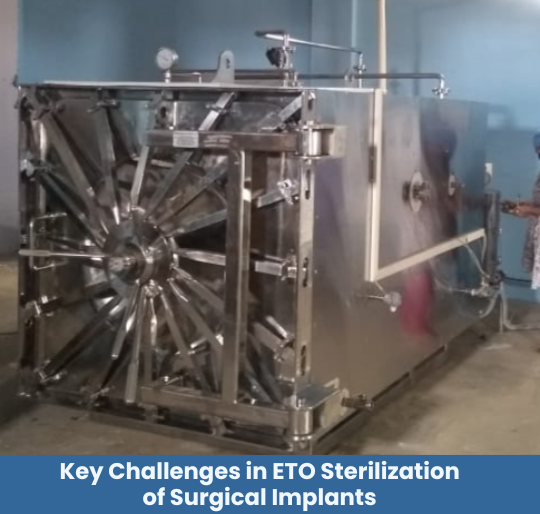
For medical device manufacturers requiring high-throughput sterilization across large batch volumes, Industrial ETO Sterilizer Machine offers chamber capacities ranging from 45 CFT to 720 CFT. Available in both fully stainless steel and mild steel-to-stainless constructions, these machines are validated for Life Science, Medical Device manufacturers, Tissue Banks and Test Lab applications – as well as PPE kit sterilization and herbal/spice sterilization. The Industrial ETO Sterilizer Machine range is equipped with the same automation, data logging and aeration systems as the fully automatic models – scaled for production-volume Medical Device Sterilisation.

Sterilization of Medical Instruments: Choosing the Right ETO Sterilizer for Your Application
The right EO Sterilizer for catheter sterilization, implant sterilization or broader medical device sterilization depends on several factors:
- Batch Volume: Table Top and Fully Automatic ETO Sterilizers serve hospitals and clinical facilities; Industrial ETO Sterilizer Machines serve manufacturing-scale requirements.
- Device Complexity: Multi-lumen catheters and dense implant trays require advanced vacuum and gas distribution systems.
- Regulatory Requirements: Facilities submitting to regulatory agencies need full data logging, parametric cycle recording and validated cycle documentation from their Medical Device Sterilizer.
- Operator Safety: The Aeration System in ETO Sterilizers is designed to minimise operator EO gas exposure – a critical requirement under occupational health regulations.
- Throughput Requirements: The chamber capacity and cycle time of the selected ETO Sterilization Machine must align with production schedules and device volumes.
Our Other Product
ETO Sterilizer AccessoriesMedical Device Sterilizer Accessories: Completing the ETO Sterilization System
An effective ETO Sterilization process requires more than the ETO Sterilizer itself. We supply a full ecosystem of EO Sterilizer accessories:
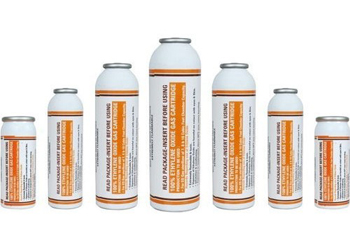
- ETO Gas Cartridges: Available in standard sizes to match the chamber volume and load requirements of each ETO Sterilization Machine model.
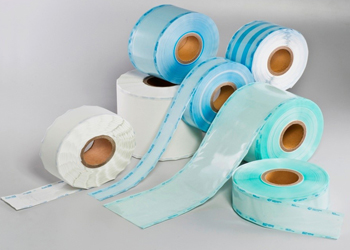
- Sterilization Rolls: EO-penetrable packaging material that maintains device sterility from the point of sterilization through to the point of use.
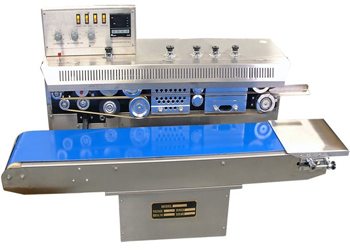
- Continuous Band Sealer Machine: Provides reliable, validated heat sealing of sterilization pouches and roll-stock packaging, ensuring packaging integrity throughout the supply chain.
 Email Us
ETO Sterilizer Solutions by Sterility Equipment India: Purpose-Built for Medical Device Sterilisation
Sterility Equipment India Private Limited, accessible at Hospital Sterilizers, is an established manufacturer and exporter of industrial-grade ETO Sterilizers and Ethylene Oxide Gas Sterilizers – purpose-built for medical device sterilization, catheter sterilization, implant sterilization and life science applications. Founded in 2014 and headquartered in Ahmedabad, Gujarat, combines advanced engineering with a deep understanding of healthcare sterilization requirements.
Conclusion: ETO Sterilization as the Standard for Complex Medical Device Sterilisation
For catheter sterilization, implant sterilization and the sterilisation of all heat- and moisture-sensitive medical devices, Ethylene Oxide Sterilization remains the most widely validated, globally accepted and regulatory-compliant technology available. The challenges of residue management, gas penetration, cycle validation and operator safety are fully addressable with the right ETO Sterilizer – one engineered specifically for the demands of medical device sterilization.
Sterility Equipment India Private Limited brings over a decade of focused expertise in EO Sterilizers – from Table Top units for clinical settings to Industrial ETO Sterilizer Machines for manufacturing-scale Medical Device Sterilisation. Built with stainless steel construction, full automation, validated data recording and industry-compliant aeration systems, range of ETO Sterilization Machines provides the performance, reliability and traceability that the sterilization of medical instruments demands.
To learn more about Sterility Equipment India Private Limited provides Medical Equipment Sterilizer range or to request a quote, visit www.hospitalsterilizers.com or contact the team at info@sterilityequipments.com.