

Medical colleges in Karnataka aren’t just classrooms with stethoscopes—they’re full-scale teaching hospitals running OPDs, IPDs, emergency services, ICUs, and high-volume operation theatres every single day. And when procedures go up, one thing becomes non-negotiable: medical sterilization that is reliable, repeatable, and safe for both patients and staff.
That’s where the ETO Sterilizer for Medical Colleges becomes an important part of the bigger puzzle. Ethylene Oxide (ETO) is not a “replacement” for steam autoclaves; it’s a specialist tool used when heat and moisture would damage instruments. If you’re mapping demand across Karnataka—from Bengaluru’s tertiary-care giants to newer teaching hospitals in north and central districts—ETO is often the bridge between advanced procedures and safe outcomes.
This guide explores city-wise medical college demand in Karnataka, explains where ETO sits inside CSSD workflows, and offers a practical buying framework covering capacity planning, safety, consumables, and vendor evaluation. Keywords are integrated naturally to help buyers searching for medical equipment sterilizer solutions and hospitals comparing options like sterilizer machine for medical instruments.
Our Other Product
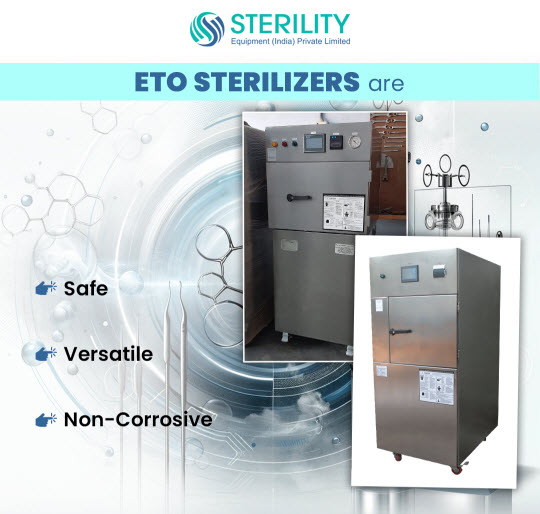
Fully Automatic ETO SterilizerWhat an ETO Sterilizer is (ETO vs Steam/Plasma)
An ETO sterilizer uses ethylene oxide gas to sterilize items at low temperatures. That makes it ideal for sterilization of medical instruments that can’t tolerate steam (high temperature + moisture) or where plasma systems may be limited by material compatibility or packaging constraints.
Think of sterilization like cooking:
- Steam is the pressure cooker—fast and powerful, but not for everything.
- Plasma is the air fryer—clean and quick, but picky about materials and loads.
- ETO is the slow marination—takes longer, but reaches delicate surfaces and lumens without heat damage.
So when you’re dealing with plastics, rubbers, tubing, catheters, certain endoscopy accessories, and complex lumen devices, ETO becomes a reliable option for medical device sterilization in teaching hospitals.
 Email Us Now!
Where ETO fits inside a teaching hospital’s CSSD workflow
In most medical colleges, the Central Sterile Supply Department (CSSD) is the engine room. ETO usually sits after cleaning and packaging, and before aeration and storage:
- Decontamination/Cleaning (manual + ultrasonic/washer-disinfectors)
- Inspection + Drying
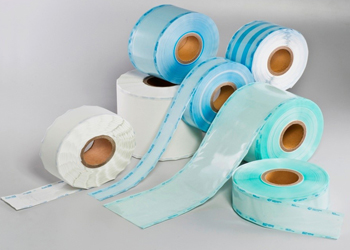
- Packaging (ETO-compatible pouches, wraps)
- ETO Cycle (gas exposure + humidity/temperature controls)
- Aeration (critical step to remove residual gas)
- Release with indicators + documentation
- Distribution back to OT/ICU/Departments
In other words, ETO is a medical sterilization equipment component that supports the “heat-sensitive lane” in CSSD.
Typical items sterilized in medical colleges using ETO
ETO shines for:
- Plastic components and tubing sets
- Catheters and cannulas (where permitted by IFU)
- Endoscopy accessories (not the scope itself in many setups, but adjuncts)
- Breathing circuit accessories (again depending on IFU)
- Certain dental/ENT plastic tools
- Device trays with mixed materials when steam is risky
This is the everyday reality of sterilization hospital medical instruments in a teaching environment where departments are constantly borrowing, returning, and reusing devices.
Karnataka Healthcare + Medical Education Demand Overview
Why Karnataka’s medical college ecosystem keeps demand high for medical sterilizers
Karnataka has a dense network of government and private medical colleges spread across major cities and regional hubs. Each college hospital typically includes:
- Multiple OTs (general surgery, ortho, OBG, ENT, ophthalmology)
- Intensive care and emergency care
- Specialty units (urology, gastro, cath lab, dental, trauma care)
That mix creates consistent demand for medical sterilizers, including low-temperature solutions such as ETO, alongside steam systems.
OPD/IPD/OT volumes and how they impact a medical sterilizer machine size
Sterilizer sizing is not a “beds-only” decision. In teaching hospitals, OT schedules fluctuate with:
- Emergency trauma load
- Specialty OPD conversion to surgery
- Academic calendars, camps, and referral peaks
Higher OT volumes increase turnover pressure. When steam lines are maxed out with metal instrument sets, ETO handles the delicate items without forcing departments into risky shortcuts. This is why many hospitals treat ETO as a throughput stabilizer in the overall medical equipment sterilization plan.
Government vs private medical colleges: procurement patterns and approval cycles
- Government colleges often buy through tenders, emphasizing compliance, specs, and price benchmarking. Timelines are longer, but they may purchase larger capacity systems when approved.
- Private colleges focus more on ROI, uptime, throughput, and service support. They may prefer reliable medical sterilizer machine setups with predictable consumables and strong AMC.
Either way, the requirement is the same: a dependable medical device sterilizer that fits workflow and safety norms.
City-Wise Karnataka Coverage: Medical College Demand Mapping
Below are practical demand patterns you’ll see across cities. (This is an overview mapping—not an exhaustive directory.)

Bengaluru (Bangalore): high procedure density and tertiary care
Why ETO Sterilizer demand is strong in Bengalure?
Bengaluru’s tertiary care ecosystem means high OT density, specialty surgeries, and heavy endoscopy/urology volumes—classic drivers for medical devices sterilization beyond steam.
Departments driving ETO demand: OT complexes, urology, gastro/endoscopy support, dental, ICU, cath lab adjuncts.
Use-cases: catheters, tubing sets, plastic components, endoscopy accessories.
Procurement needs: higher capacity chambers, strong safety features, robust aeration, documentation for audits, fast service response. Many facilities look for a machine to sterilize medical instruments that integrates with CSSD tracking.
ETO Sterilizer in Mysuru (Mysore): teaching + referral demand
Mysuru functions as a referral hub for nearby districts, so teaching hospitals often see bursts in surgical and ortho loads.
Drivers: ortho OT volume, ENT/dental turnover, ICU accessories.
Needs: mid-capacity ETO, reliable consumables, strong AMC.
ETO Sterilizer in Mangaluru (Mangalore): coastal hub + private medical colleges
Mangaluru’s private medical college ecosystem often adopts modern workflow standards early.
Drivers: endoscopy support, urology, specialty surgeries, dental.
Needs: emphasis on compliance, validation, and clean documentation for sterilization process for medical devices.
ETO Sterilizer in Hubballi–Dharwad: North Karnataka referral belt
High trauma referrals and multi-specialty load push CSSD capacity.
Drivers: general surgery, ortho, ICU, emergency.
Needs: practical throughput planning—cycle + aeration scheduling matters as much as chamber size.
ETO Sterilizer in Belagavi (Belgaum): established education cluster
Belagavi’s mature medical education environment tends to have structured procurement and active specialty departments.
Drivers: multiple OTs, dental, ENT, urology.
Needs: balanced mix of steam + ETO, with strong indicators and release discipline.
ETO Sterilizer in Davanagere: central Karnataka growth
As hospital infrastructure grows, so does the need for scalable medical sterilization equipment.
Drivers: expanding OTs, increasing elective surgeries.
Needs: future-proofing—choose chamber size with growth buffer.
ETO Sterilizer in Shivamogga: regional care hub
Regional hubs typically need dependable systems with minimal downtime.
Drivers: OT load + ICU support accessories.
Needs: reliable medical sterilizer with service availability and spare readiness.
ETO Sterilizer in Ballari (Bellary): district + teaching hospital demand
Often sees high patient load and mixed case complexity.
Drivers: ortho/trauma, general surgery, ICU.
Needs: workflow discipline, packaging training, stable consumables pipeline.
ETO Sterilizer in Kalaburagi (Gulbarga): north-east Karnataka
Growth in infrastructure and referral needs creates demand for low-temp sterilization solutions.
Drivers: surgery + urology, expanding diagnostics.
Needs: vendor support and operator training are key.
ETO Sterilizer in Vijayapura (Bijapur): expanding healthcare infrastructure
As services expand, procurement frequently looks for “one system that solves multiple problems.”
Needs: clarity on what ETO can and can’t do, plus a realistic schedule plan.
ETO Sterilizer in Tumakuru: Bengaluru satellite demand
Hospitals here often match Bengaluru’s pace but must plan carefully for budgets.
Needs: mid-capacity ETO with robust AMC, easy compliance.
ETO Sterilizer in Hassan / Mandya / Kolar belt: grouped demand
These cities share referral patterns and rising procedure loads.
Needs: cost-effective but safe medical sterilizing machine solutions, with disciplined CSSD SOPs.
Testimonial
“Excellent service and quality of machine ..”
Department-Wise Demand Drivers in Medical Colleges
Operation theatres and surgical departments
OTs generate the highest sterilization load. Steam handles most metal sets, but ETO supports heat-sensitive accessories, especially when mixed materials exist. This balance prevents delays and supports smoother sterilization of medical equipment management.
Endoscopy & OT support
Endoscopy accessories often include plastics and delicate components. Where required by device instructions, ETO supports sterilization for medical devices that can’t take high heat. Teaching hospitals also use endoscopy heavily for training, which increases turnover pressure.
Dental & ENT
Dental and ENT departments are high-frequency users: lots of small items, rapid turnaround expectations. A good sterilizer machine for medical instruments strategy here is scheduling—ETO cycles are longer, so departments must plan loads properly.
Ortho instruments vs implants accessories
Ortho instruments are usually steam-sterilized, but accessories and certain non-metal components may require low-temp methods. This “mixed load” environment makes ETO valuable.
CSSD bottlenecks and ETO’s role
CSSD bottlenecks typically come from:
- limited sterilizer capacity
- long aeration scheduling
- packaging errors
- poor load planning
ETO helps only when it is integrated into the workflow with realistic cycle planning and a good release protocol.
How Medical Colleges Decide ETO Sterilizer Capacity
Estimating demand: beds + OTs + cases/day
A simple sizing logic:
- Count number of OTs
- Estimate average OT cases/day
- Identify heat-sensitive device trays/loads per day
- Factor cycle + aeration time
If you have 8 OTs doing 6 cases/day each, and even 15–25% of cases use ETO-required items, your daily ETO load can add up fast.
Single-door vs double-door ETO (hospital zoning)
- Single-door: fits smaller CSSDs, easier install, but zoning must be managed carefully.
- Double-door (pass-through): supports clean/dirty separation better and is preferred for strong infection-control zoning in many hospitals.
ETO Chamber size planning: small / mid / large
- Small capacity: specialty loads, lower OT counts, research/lab support
- Mid capacity: typical teaching hospitals with steady volume
- Large capacity: tertiary care centers with multiple specialties and heavy throughput needs
Choose based on real load patterns, not just “bigger is better.”
ETO Compliance, Safety & Hospital Requirements
ETO safety basics: aeration, leakage control, monitoring
ETO is effective—but it demands respect. Key safety expectations:
- dedicated or integrated aeration
- leakage control and monitoring
- trained operators and strict SOPs
This is central to safe ethylene oxide medical sterilization in healthcare settings.
Indicators, validation, and documentation
Teaching hospitals usually require:
- chemical indicators (batch-level)
- biological indicators (as per protocol)
- cycle records and validation reports
This supports consistent sterilization of medical devices and audit readiness.
Sterilizer Installation requirements
Plan for:
- ventilation and exhaust compliance
- space and zoning
- power and utilities
- operator training and competency checks
A good medical grade sterilizer setup is as much about the room and SOPs as the machine.
Our Other Product
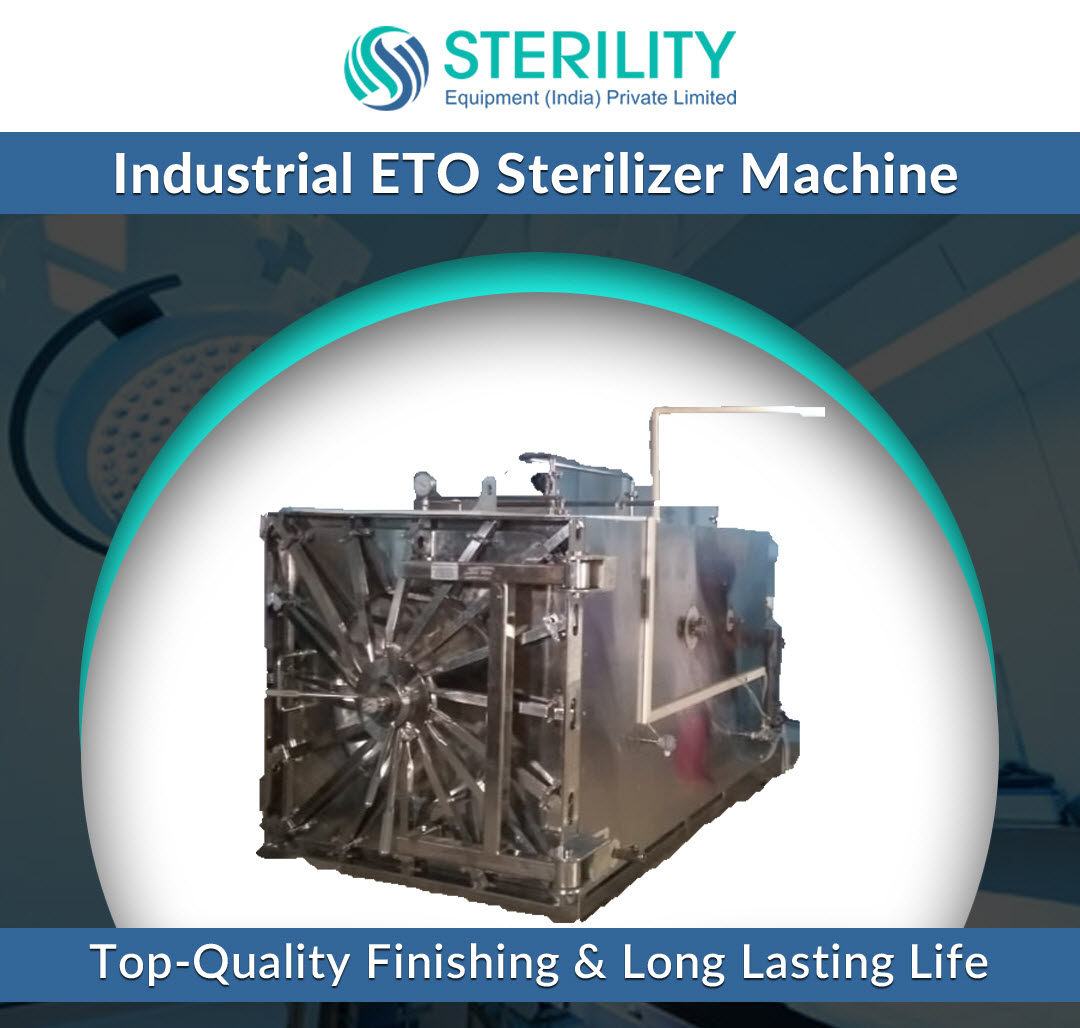
Table Top ETO SterilizerConsumables & Sterilizer Operating Cost Considerations
Cartridges/cylinders, packaging, indicators
ETO needs:
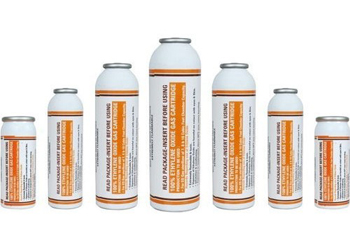
- gas cartridges/cylinders
- ETO-compatible packaging
- indicators and monitoring supplies
These are part of the ongoing medical sterilization supplies budget.
Cycle time + aeration time impact
ETO cycles plus aeration can take significant time. This affects throughput, so scheduling is critical for teaching hospitals with peak OT hours.
Cost-per-cycle thinking
For buyers, cost-per-cycle should include:
- consumables
- power
- manpower time
- downtime risk
- AMC
This is the most practical way to compare options when selecting a medical equipment sterilizer.
Sterilizer Procurement, Tendering & Vendor Evaluation
Government purchase flow
Government tenders typically focus on:
- technical compliance
- safety requirements
- documentation and validation support
- warranty + AMC terms
- training commitments
Private ETO Sterilizer purchase flow
Private colleges often evaluate:
- uptime
- throughput
- consumable availability
- ROI and service response times
ETO Sterilizer Vendor checklist
Before finalizing, check:
- certifications and compliance documents
- installation experience in Karnataka
- service network and response SLAs
- spare availability and AMC structure
- operator training plan
Conclusion
Medical colleges in Karnataka operate like mini-cities—high patient flow, intense training activity, and diverse departments all pulling from the same sterilization pipeline. A well-planned ETO solution supports safe medical instrument sterilization for heat-sensitive devices and keeps CSSD from becoming a bottleneck when OT volumes surge. The smart approach is not “ETO vs everything else,” but “ETO as part of a balanced sterilization ecosystem.” If you map demand city-wise, understand departmental use-cases, plan capacity using OT realities, and prioritize safety + service support, you’ll end up with a system that genuinely improves patient safety, staff confidence, and daily hospital flow.