


Hospital sterilizer planning should begin at the facility design and procurement stage, alongside decisions on clinical layout and instrument handling workflows. A new facility rarely has historical usage data to draw on, so capacity and technology decisions need to be built up from the departments that will generate reusable instruments, the volumes those departments expect to process, and the turnaround times clinical teams will demand.
Sterilization equipment for new hospital projects is too often chosen around a chamber size a vendor recommends, rather than around documented clinical need. A more reliable approach begins with departmental demand, works through instrument classification and load estimation, and builds toward a hospital sterilization equipment requirements checklist that buyers can use before approaching a hospital sterilizer manufacturer for proposals.
Start Hospital Sterilizer Planning With Clinical Departments
Every planning exercise should start with a review of each department that could generate reusable instruments. Operating theatres are usually the largest contributor, but emergency care, labour and delivery, dental departments, outpatient procedure rooms, diagnostic departments, wards and treatment areas, and laboratories where applicable can all generate instrument sets requiring reprocessing.
For each area, planners should record expected procedures, operating hours, procedure frequency and the reusable instrument sets tied to that service. This departmental map becomes the reference point for every later step. At this stage, avoid estimating instrument quantities without verified data. The goal is simply to identify which departments place demand on the healthcare facility sterilizer, not to size equipment yet.
 Email Us Now!
Assess Instrument Types and Processing Volumes
An instrument inventory should cover instrument categories, the number of sets each department expects to use, the trays, packs and containers involved, and their approximate dimensions and load density. Note how frequently sets are reused between procedures, since departments relying on a small number of sets circulating quickly behave differently from those with large duplicate inventories.
It helps to separate the facility’s total instrument inventory from the number of items that must actually move through sterilization during a single shift or cycle. These are often confused, and the distinction shapes the load and capacity work that follows. Packaging configuration and the availability of duplicate sets should also be recorded here.
Calculate Daily Sterilization Loads and Turnaround Requirements
This step answers a narrow question: what needs to be processed, and how often? It should cover normal daily workload, peak hour demand, the number of operating shifts, and the cycles per day this implies, along with loading and unloading time, cleaning and packaging time before sterilization, and any cooling, aeration or release time once a cycle ends.
Required instrument turnaround is a critical input here, as is an allowance for routine downtime, since no facility can rely on 100 percent equipment availability. This section deliberately stops short of sizing the equipment itself. That calculation, covered next, depends on how the loads identified here translate into usable chamber space.
Identify Heat and Moisture Sensitive Devices
Not every instrument can be processed the same way, and this is where hospital sterilization equipment requirements begin to diverge between departments. Instruments need to be classified by material compatibility and by the processing instructions their manufacturers provide.
Planners should separate heat resistant instruments from heat sensitive devices, identify moisture sensitive materials, and flag plastic or polymer components, electronic or complex devices, porous loads, lumened devices and items requiring specialised packaging. A hospital should not select one technology for every item without checking compatibility against validated processing instructions.
Choose the Right Sterilization Technology
Technology selection should follow the instrument and material assessment rather than precede it. Relevant factors include compatibility between devices and materials, required processing conditions, load type and packaging, available utilities, occupational and facility safety requirements, the installation environment, and who is responsible for validation, operation and maintenance once equipment is running.
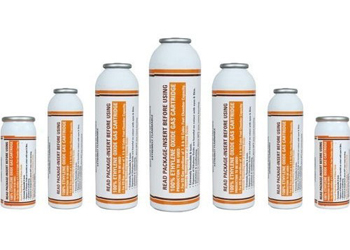
Where a facility has compatible heat sensitive or moisture sensitive products, ETO equipment may form part of the sterilization strategy, subject to device instructions, applicable regulatory requirements and the specific clinical application. This is one of several factors to consider when selecting sterilization equipment for a new hospital project, alongside device compatibility. No single method should be treated as universally superior.
Determine Hospital Sterilizer Capacity and Quantity
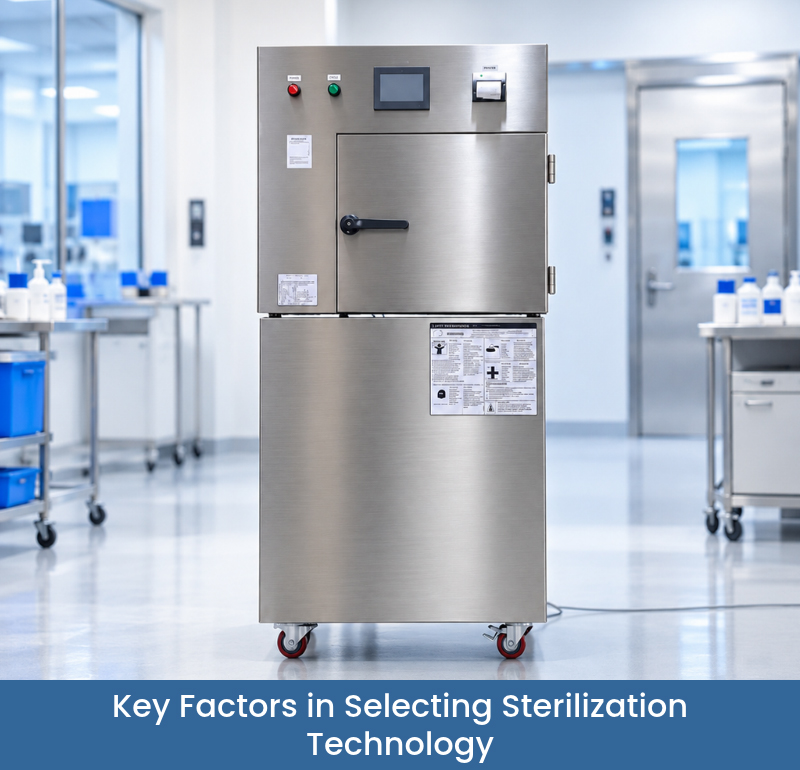
With departmental demand, instrument volumes and technology requirements established, this step answers a second question: how much equipment is required to process it? The calculation should look at usable chamber space rather than nominal chamber volume alone, maximum tray or pack dimensions, load configuration, peak demand, and backup capacity if a unit goes down for service.
Current and projected instrument volumes should be assessed separately rather than blended together, since blending them tends to produce equipment that is either undersized today or oversized for years. One large sterilizer and several smaller units also carry different implications for workflow, redundancy and scheduling. Neither is automatically preferable, and the right answer depends on the facility’s operating pattern.
Tabletop vs Higher Capacity Systems
| Planning factor | Tabletop system | Higher capacity system |
|---|---|---|
| Planning context | Smaller or decentralised requirements | Centralised or higher volume processing |
| Load pattern | Smaller, more frequent loads | Larger planned batches |
| Space planning | Generally smaller installation area | More detailed room and access planning |
| Operational use | Considered when demand supports it | Considered when central throughput justifies it |
| Future flexibility | Selected departmental requirements | Broader facility level demand |
The final choice should rest on a verified load study, intended application and confirmed device compatibility. It should not rest on hospital size or bed count alone.
Plan Hospital Sterilizer Capacity for Future Growth
A new facility’s sterilizer plan should also account for growth: additional beds, new operating theatres, higher procedure volumes, new clinical departments, longer operating hours, regional referral demand, and changes in sterilization practice over the equipment’s service life.
Sensible future capacity planning differs from excessive oversizing. The allowance should reflect realistic, phased development rather than an arbitrary percentage. Reserving space and utility provisions for later expansion is worthwhile even where additional equipment is not purchased immediately.
Check Equipment Room Space and Utility Requirements
Equipment selection needs close coordination with architects, biomedical engineers and facility planners rather than being finalised in isolation. This covers equipment room dimensions, doorways and access routes, loading and unloading clearance, operator working space, maintenance access, floor loading considerations, and ventilation and exhaust.
It also covers electrical supply and, where applicable, water, steam, compressed air or drainage connections, along with gas storage arrangements and integration with building services. Buyers should obtain verified utility consumption and connection details from the manufacturer before finalising the equipment room, since different technologies do not draw on the same utilities.
Design Clean and Contaminated Workflow
Instrument movement should follow a planned path: receipt of contaminated items, cleaning and decontamination, inspection, assembly and packaging, sterilization, release, sterile storage and distribution. Physical or procedural separation between contaminated and clean activities, including personnel movement and loading and unloading arrangements, should be built into the facility layout rather than added afterwards.
What to Check When Comparing Hospital Sterilizer Manufacturers
Before ordering, buyers should clarify site readiness responsibilities, delivery boundaries, equipment positioning, utility connections, installation scope, pre installation inspection, commissioning, functional testing and documentation handover, along with operator training, safety training and preventive maintenance schedules. None of this should be assumed to be automatically included with the purchase.
When comparing hospital sterilizer suppliers in India, procurement teams should evaluate more than the quoted equipment price. A capable hospital sterilizer manufacturer should be able to discuss technical documentation, installation scope, commissioning support, operator training, availability of spare parts, utility requirements and after sales service as part of the purchase conversation.
What Makes the Best Hospital Sterilizers for a New Facility?
There is no single sterilizer that qualifies as best across every hospital, so “Best Hospital Sterilizers” is really a question of fit. The right equipment for a given facility is the one matched to its application, its compatible load types, its required capacity, and its clean and contaminated workflow.
Beyond the equipment itself, the strength of the surrounding support matters just as much: available utilities, installation conditions, after sales service, operator training, documentation and room for future expansion. Evaluating suppliers against these factors gives a more reliable answer than comparing headline specifications alone.
Hospital Sterilization Equipment Requirements Checklist
- Clinical departments and services identified
- Reusable instrument inventory completed
- Normal and peak daily loads estimated
- Required turnaround times established
- Device compatibility reviewed
- Suitable sterilization technologies shortlisted
- Required capacity and load dimensions defined
- Backup or redundancy needs considered
- Current and future demand assessed separately
- Installation space confirmed
- Utilities and ventilation reviewed
- Clean and contaminated workflows planned
- Equipment delivery access checked
- Installation and commissioning scope clarified
- Staff training requirements documented
- Maintenance and spare parts expectations defined
- Supplier claims verified against official documentation
Common Hospital Sterilizer Planning Mistakes
Frequent avoidable errors include selecting capacity based only on bed count rather than department level procedure volumes, confusing total instrument inventory with daily processing demand, and using average loads without allowing for peak periods. Overlooking turnaround requirements can leave departments waiting for sets still in process.
Assuming every device can use the same technology, or comparing systems only by nominal chamber volume rather than usable capacity, both lead to poorly matched equipment. Failing to allow for maintenance downtime, oversizing without a realistic demand forecast, and finalising the equipment room before obtaining utility requirements are common and expensive gaps. So are leaving installation and validation responsibilities undefined and omitting operator training from the purchase plan.
 Call Now!
Hospital Sterilizers India: Working With the Right Equipment Supplier
Sterility Equipment India Private Limited is a hospital sterilizer manufacturer based in Ahmedabad, Gujarat, offering three product categories with different capacity and configuration profiles:
| Product category | Stated capacity or configuration |
|---|---|
| Table Top ETO Sterilizer | 50 to 85 litre range, compact and portable design |
| Fully Automatic ETO Sterilizer | 100 to 450 litre range, automatic cycle progression |
| Industrial ETO Sterilizer Machine | Series of cubic foot chamber sizes, single or double door configurations |
These ranges correspond to the tabletop versus higher capacity distinction covered earlier, and buyers comparing hospital sterilizer suppliers in India can request further specification detail directly from the company for their project.
Conclusion
Hospital sterilizer planning works best when it starts with the clinical departments generating instrument demand and builds outward through instrument classification, realistic load estimation, device compatibility checks and only then a capacity decision. Space, utilities and workflow need to be planned early enough to shape the equipment room rather than constrain it afterwards, and future growth, planned downtime and staff training all deserve a place in the same document.
Working through these requirements before requesting quotations gives healthcare decision makers a stronger, more comparable basis for evaluating supplier proposals.