

ETO sterilizer revalidation decisions start with one question: does a change affect the evidence supporting your validated sterilization process? When a product, material, packaging, load, equipment, software or facility change could affect that evidence, a documented impact assessment is needed before routine production continues.
The assessment can lead to one of three outcomes: no additional testing, targeted studies or partial requalification, or full process revalidation. The sections below work through the changes that commonly raise this question and how teams scope an appropriate response.
ETO Process Validation, Requalification and Revalidation Explained
Initial ETO process validation establishes, for the first time, that a sterilization cycle consistently delivers a sterile product for a defined product and load. It proceeds through installation qualification (IQ), operational qualification (OQ) and performance qualification (PQ), confirming installation, operating parameters, and that the cycle reliably achieves the required sterility assurance level.
Requalification confirms that an already validated process or piece of equipment still performs as expected, often after a defined change or at a scheduled interval. ETO cycle requalification is typically narrower than a full validation campaign, because it reuses the existing process definition and tests only the elements the change could affect. Revalidation is the broader activity triggered when a change or new evidence suggests the existing validated state may no longer be adequate.
EO sterilizer change control provides a documented basis for ISO 11135 revalidation decisions by assessing how proposed changes affect the validated process. Routine monitoring, through review of indicator results and cycle records, confirms that a validated process continues to perform as expected between formal assessments. Terminology still varies between quality systems and standards, so rely on approved procedures rather than assuming the terms are interchangeable.
 WhatsApp Us
ETO Sterilization Revalidation: Product Design and Material Changes
Product design and material changes are among the most common triggers for ETO sterilization revalidation questions. Changes to device dimensions, lumen geometry, subassemblies, coatings, adhesives or base materials can alter how ethylene oxide gas penetrates the product, is absorbed, or leaves residuals behind.
A longer or narrower lumen may change gas diffusion and conditioning, a new coating or adhesive may change residual levels, and a material substitution may alter bioburden characteristics even when the replacement appears equivalent to the material it replaces.
Manufacturing process or supplier changes deserve the same scrutiny when they could alter a material’s characteristics or bioburden profile. An apparently equivalent replacement still needs supporting evidence before acceptance into an existing validated product family.
Where a change could affect EO or ethylene chlorohydrin residuals, assess it against ISO 10993-7, which sets acceptable residual limits separately from the process validation requirements in ISO 11135.
ETO Sterilizer Revalidation: Packaging and Load Changes That Need Assessment
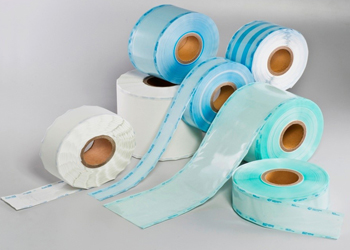
Packaging and load changes affect sterility through different mechanisms. Packaging changes include sterile barrier material, pouch or tray dimensions, seal integrity, protective overwraps, and carton configuration, all of which influence gas and moisture permeability and the time needed for conditioning and aeration.
Load changes include density, orientation, pallet pattern, mixed product loads, and minimum or maximum loading limits, all of which influence how evenly EO gas, temperature and humidity reach every item in the chamber.
An unchanged chamber volume does not demonstrate unchanged load performance. A denser load pattern or a new mixed product configuration can create cold spots or restricted gas access inside the same chamber.
Review whether the worst case products and load configurations used in the original study remain representative, along with the placement of process challenge devices (PCDs). Process challenge devices provide a defined challenge to the sterilization process and are used to assess its performance.
EO Sterilizer Change Control: Equipment Repairs, Software Upgrades and Relocation
Routine maintenance, such as replacing a worn gasket to original specification, differs from a change affecting a critical function. Replacement or modification of sensors, vacuum pumps, valves, seals or gas admission components can shift how a cycle delivers its parameters, and this warrants assessment before the equipment returns to routine use. The same logic applies to software or PLC changes: consider the effect on cycle recipes, timing, alarms, interlocks, access controls and electronic records. Not every patch changes sterilization performance, but the assessment should confirm that rather than assume it.
Relocating a sterilizer brings its own variables: reinstallation, reconnection of utilities, and the new site’s environmental conditions. There is no universal rule that relocation needs only a repeat IQ, or always a full revalidation; the scope depends on what changed in how the cycle is delivered at the new location.
ETO Cycle Requalification: Utility and Cycle Parameter Changes
Changes to power supply, steam, compressed air, humidity supply, EO gas supply or related facility interfaces can affect how consistently a cycle delivers conditioning, temperature, humidity, pressure, vacuum, EO exposure, timing, evacuation and aeration.
A programmed setting that remains within validated limits does not, by itself, rule out a need for further verification, because the supplying utility may no longer behave as it did during the original study.
Ventilation or abatement modifications matter here only where they affect the process interface, operational safety or site approval conditions tied to the sterilization process.
How to Decide the Scope of ETO Sterilizer Revalidation
A practical assessment sequence looks like this:
- Define the change precisely, and identify the products, loads and systems it could affect.
- Compare the proposed condition against the validated baseline.
- Assess the risk and review the existing supporting evidence.
- Determine whether current worst case assumptions still hold.
- Define justified studies and acceptance criteria before testing begins.
- Obtain approval, execute the work, and resolve any deviations.
- Authorise return to routine use through the quality system.
A documented assessment is required even when no additional testing is needed. The absence of testing is itself a decision that must be recorded.
| Change Example | Key Assessment Question | Evidence to Consider |
| New lumen geometry or device material | Does the change affect EO penetration or residual behaviour for this product family? | Prior penetration studies, ISO 10993-7 residual data |
| Revised pouch material or seal design | Does the new packaging still support validated conditioning and aeration times? | Sterile barrier permeability and seal integrity data |
| Denser or mixed product load pattern | Are the existing worst case products and PCD placements still representative? | Load mapping studies, PCD results |
| Replacement of a vacuum pump or gas admission valve | Does the component affect how gas, vacuum or pressure are delivered to the load? | Calibration records, OQ data, maintenance history |
| PLC or recipe software update | Does the update change recipe logic, timing, alarms or records? | Software verification records, change control documentation |
| Sterilizer relocation | Do the new utilities and environment still support the validated process definition? | IQ data, utility qualification, environmental monitoring |
Use the table to frame the right question for each category of change; weigh the evidence against the organisation’s approved criteria.
When Targeted Studies Are Not Enough
Targeted assessment and partial requalification are often sufficient. A condition that falls outside the original worst case requires assessment and additional supporting evidence, but this does not automatically mean targeted studies are inadequate.
Broader revalidation is appropriate when targeted studies cannot adequately demonstrate that the revised process remains suitable, for example where several changes have accumulated without ever being tested together, or where a parameter central to sterility assurance can no longer be shown to behave as it did during original validation.
Medical Device Sterilization Revalidation: Evidence and Acceptance Criteria
Reaching a sound medical device sterilization revalidation decision depends on reviewing the right evidence. Depending on the change, relevant evidence may include:
- Comparison against approved process ranges and tolerances
- Calibration and sensor accuracy
- Temperature and humidity distribution or penetration studies
- Pressure, vacuum and leak test performance
- Biological indicator and PCD results
- Microbiological performance and bioburden assumptions
- Aeration effectiveness and residual testing
- Packaging integrity and product functionality
- Cycle records, alarms and software verification
A passing chemical indicator alone does not establish sterility, and a successful equipment function check does not demonstrate that the product cycle combination still performs as validated.
Each line of evidence answers a different question about the revised process.

ISO 11135 Revalidation: Periodic Review and Change Control Documentation
Periodic review is distinct from scheduled requalification. It is the ongoing look at cycle trends, deviations, maintenance history, calibration records, product changes, bioburden data and prior study results, intended to confirm that the validated state remains current.
ISO 11135:2014 (Edition 2, with Amendment 1:2018) calls for an annual review of the qualification evidence supporting the validated process, as reflected in AAMI’s technical guidance on the standard.
This review confirms that the supporting evidence remains current; it does not by itself set the scope or timing of any further testing the review identifies as necessary. Confirm the exact wording and criteria in the applicable edition and amendments, together with your own approved procedures, before finalising a review programme.
Essential change control records include the change description and justification, the validation documents and products affected, the risk assessment and scope rationale, the approved protocol and acceptance criteria, the results and any deviations, and updated procedures, training and approval for routine use.
Quality assurance approves the decision, technical teams assess and execute the work, and regulatory professionals evaluate market specific implications. A supplier’s technical support does not replace the manufacturer’s own quality system responsibilities.
About Sterility Equipment India Private Limited, an ETO Sterilizers Exporter
Sterility Equipment India Private Limited, based in Ahmedabad, Gujarat, manufactures ETO sterilizers across three product lines: the Table Top ETO Sterilizer, available from 50 to 85 litres for compact, benchtop use; the Fully Automatic ETO Sterilizer, available from 100 to 450 litres for hospitals and medical colleges; and the Industrial ETO Sterilizer Machine, built with a single or double door chamber for larger capacity requirements.
The equipment serves life science, medical device, tissue bank and test laboratory applications. Quality teams working with an ETO sterilizer machine are welcome to discuss their equipment and documentation requirements with Sterility Equipment India Private Limited.
Conclusion
A change is a trigger to ask whether it affects the evidence supporting the validated state, not an automatic instruction to repeat an entire validation. Assess the change, define the evidence needed, complete any approved studies, and document the decision before returning to routine operation.