

Effective bioburden control before ETO sterilization starts long before a product enters the chamber. Raw materials, personnel, the production environment, storage and packaging influence the microbial condition of the load. Using ETO for sterilization is one part of a wider contamination-control system that begins during manufacturing. Together, these controls create a more consistent starting condition for processing. Understanding and managing pre-sterilization bioburden helps quality, microbiology and validation teams recognise microbial changes before they create larger concerns. Representative medical-device bioburden testing supports sterilization quality control and provides information needed during ETO cycle development, while equipment suitability must still be assessed for the intended product, packaging and load.
What Is Pre-Sterilization Bioburden?
Pre-sterilization bioburden is the population of viable microorganisms on or within a product before sterilization. Assessment includes more than a recovered count: organism types, distribution, batch variation and potential resistance may affect the challenge. Materials, construction and holding conditions provide essential context for interpretation. A result is also influenced by the sampling and microbial-recovery method. Some geometries hinder recovery, while antimicrobial residues can inhibit detection. Recovery efficiency and method suitability must therefore be understood. Criteria should reflect product-specific risk, process knowledge, applicable standards and the quality system—not a universal limit.
 Call Us Now!
Cleaning, Disinfection and ETO Sterilization Controls
Cleaning, disinfection and sterilization have different purposes. A product may not require separate disinfection before ETO sterilization; the sequence depends on its design, intended use and manufacturing process. Cleaning addresses soil and residues, disinfection provides a defined reduction on suitable surfaces or items, and sterilization is the validated microbial-inactivation step. These distinctions should remain clear in procedures, training and batch documentation. When selecting an ETO Sterilization machine, manufacturers should consider how the equipment will support the intended product, packaging and load configuration. Broader ETO sterilization equipment requirements should likewise be connected to the intended process rather than treating these controls as interchangeable.
| Process | Main Purpose | Typical Position in the Control Strategy | Important Limitation |
| Cleaning | Removes soil, residues and some microbial contamination | Before further processing or sterilization, where applicable | Does not automatically produce a sterile product |
| Disinfection | Reduces specified microorganisms on suitable surfaces or items | Where a defined microbial reduction is required | Does not necessarily eliminate all forms of microbial life |
| Sterilization | Applies a validated process intended to render a product free from viable microorganisms | Final microbial-inactivation step for applicable products | Effectiveness depends on defined process conditions and product suitability |
How Manufacturing Conditions Affect Pre-Sterilization Bioburden
Contamination can enter during receipt, assembly, manual handling, equipment contact or movement between areas. Interruptions, maintenance and ineffective cleaning add exposure, while extended holding may change microbial conditions where moisture or product materials support survival or growth. Teams should map exposed surfaces, open-product duration, personnel contact, temporary storage, tools and fixtures. Records should allow changes to be compared by shift, line, production stage or interruption. This process-based approach to microbial contamination control identifies preventive-control points and helps teams investigate variation using manufacturing evidence rather than the finished-product result alone.
Raw-Material Controls for Pre-Sterilization Bioburden
Microbial control should begin before assembly. Supplier qualification and specifications should reflect intended use and contamination risk; not every material requires the same microbial test. Receiving controls should address packaging condition, storage, traceability, stock rotation, opened materials, component cleaning, controlled-area transfer and process water where applicable. A supplier change, damaged transit packaging or extended storage of an opened component should trigger review because each can alter the evaluated condition. Lot traceability then helps identify affected products when unusual results arise.
Cleanroom Practices for Microbial Contamination Control
In controlled environments, gowning, hand hygiene, training and disciplined access reduce contamination. Material transfer, surface cleaning and intervention controls should protect exposed products. Procedures should define how compromised items are segregated and how production resumes after maintenance or facility events. Observing operators can reveal recurring interventions absent from written records. Environmental monitoring describes conditions in the area, whereas product testing measures organisms recovered from the product. The datasets support one another but are not substitutes.
Packaging Controls Before ETO Sterilization
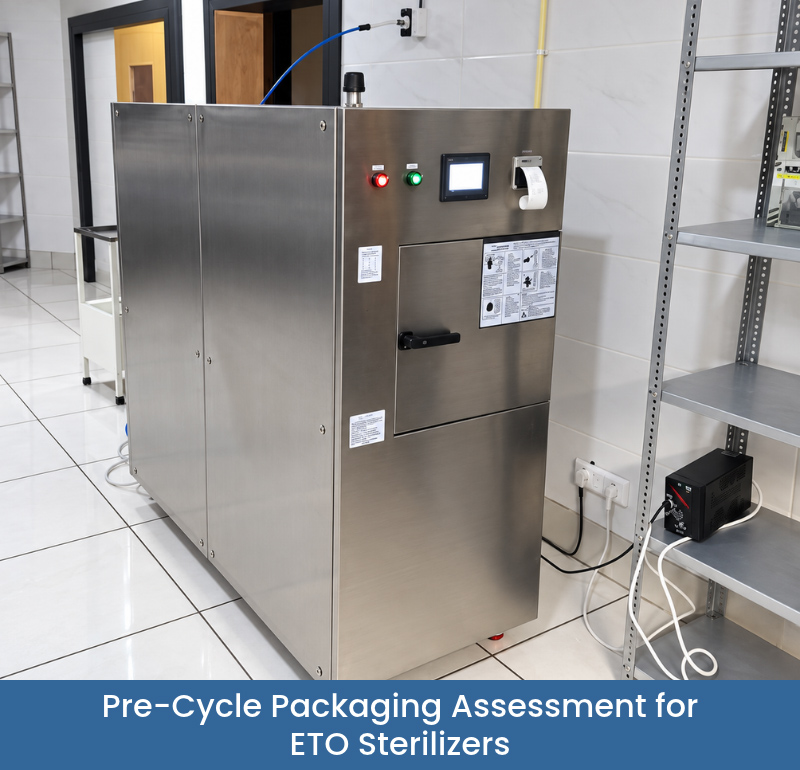
Packaging must protect the product while remaining suitable for the validated process. Cleanliness, sealing and loading affect contamination control and process exposure. Where gas permeability is required, materials must suit the product. Operations should control exposed-product time, seal inspection, post-closure handling, batch identification and damaged packs. Storage conditions and the justified pre-sterilization hold time should be defined, while lost package integrity must prompt assessment under an established procedure.
Medical-Device Bioburden Testing and Sampling
Medical-device bioburden testing measures viable microorganisms recovered under defined conditions. A sampling plan should justify representation across batches, shifts, production lines, product families or manufacturing stages. Sample protection and time to testing should prevent population changes. The method should address recovery efficiency, culture conditions and neutralisation of antimicrobial effects where relevant, while recovery categories should reflect product-specific risk. Laboratory controls, method suitability and traceable records support interpretation. A single result describes the tested sample and should not be treated as representative of all production unless the sampling strategy is scientifically justified.
Pre-Sterilization Bioburden Trend Analysis
Sterilization quality control requires more than isolated pass-or-fail review. Trends can reveal gradual shifts within established limits. Teams may compare counts, organism types, batches, lines, shifts, material lots, product families, manufacturing stages and holding times; seasonal patterns and repeated unusual isolates may also be informative. An exceedance is a result outside an established acceptance criterion, whereas an unfavourable trend may be a sustained increase or changing profile even while individual results remain within limits. Alert and action levels should be scientifically justified for the product and process rather than copied from an unrelated application.
How Bioburden Data Supports ETO Cycle Development
Bioburden information helps define the microbial challenge during ETO cycle development, but cannot validate a cycle by itself. Development must consider materials, product and packaging configuration, load arrangement, and microbial quantity, variability and resistance. These factors support representative or worst-case selection and appropriate product families. The wider strategy may address preconditioning, process exposure, biological indicators where required by the selected approach, routine monitoring and equipment capability. A recovered count alone cannot demonstrate gas access to difficult locations, packaging suitability or complete-load exposure; those questions require evidence from the complete product and process-validation strategy.
Investigating Unexpected Pre-Sterilization Bioburden Increases
An investigation should first confirm sample identity, test information, laboratory controls and recovery-method performance. Microorganism identification may help distinguish a laboratory anomaly from a material, personnel, water, environmental or handling source. Production records should then be reviewed for raw-material changes, maintenance, cleaning, interruptions, extended holding, packaging conditions and related results from other batches or products. Established procedures should guide affected-product evaluation and documentation of root cause and corrective or preventive action. Retesting until a favourable value appears does not explain the original result or demonstrate that the source of variation has been removed.
Why ETO Sterilization Cannot Replace Manufacturing Hygiene
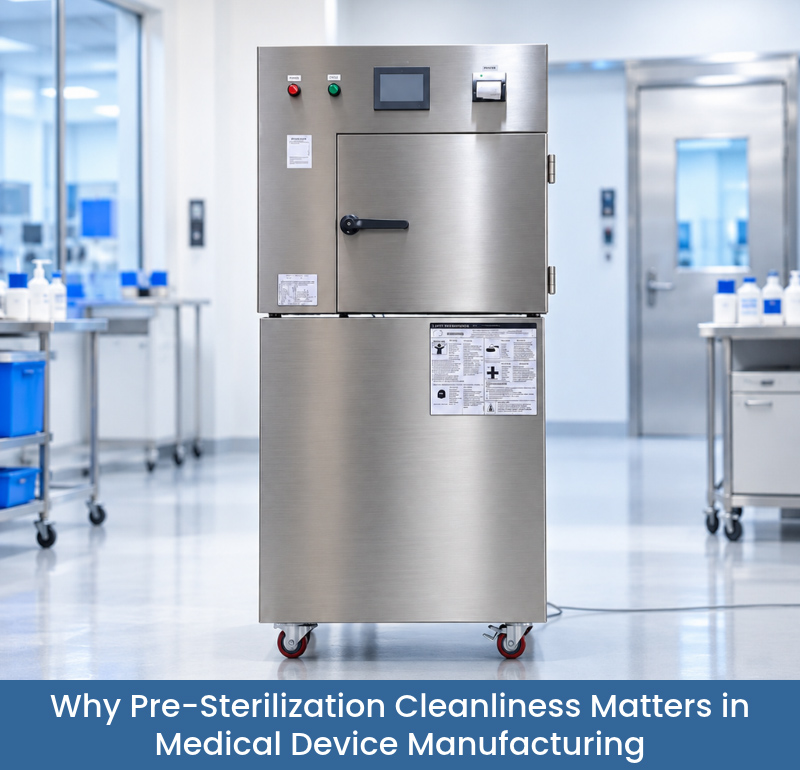
ETO processing is a validated microbial-inactivation step, not a general clean-up measure. Variable contamination can complicate development, increase validation uncertainty and signal failures involving materials, personnel, equipment or the environment. Upstream failures may also create residues, damage or compromised seals that microbial inactivation cannot repair. Teams should compare microbiology findings with supplier, production, cleaning, maintenance, environmental and packaging records rather than adjust the cycle without evidence. No count should be assumed to cause failure without product-specific validation and acceptance criteria.
Pre-Sterilization Bioburden Control Checklist
- Define risk-based material and supplier controls.
- Establish personnel and cleaning procedures.
- Control exposure, handling and in-process holding times.
- Protect packaging and seal integrity.
- Use justified sampling and suitable recovery.
- Review results and monitor trends.
- Investigate unusual organisms and unexpected increases.
- Document corrective actions.
- Consider bioburden variability when defining the microbial challenge.
Common Pre-Sterilization Bioburden Control Mistakes
- Increasing cycle exposure without investigating a changing bioburden profile can conceal the source of variation.
- Unjustified limits may not reflect the product or process.
- Finished-batch-only testing overlooks upstream sources.
- One sampling location may not represent lines, shifts or configurations.
- Ignoring recovery limitations can create false confidence.
- Counts alone can miss changes in organism types.
- Environmental data is not product bioburden.
- Ignoring holding time can obscure microbial changes.
- Retesting without investigation leaves the cause unresolved.
- Unassessed material or packaging changes may affect validated conditions.
- Assuming one cycle covers every configuration exceeds the evidence.
- Separating microbiology, production, QA and validation data limits investigations.
About Sterility Equipment India Private Limited
Sterility Equipment India Private Limited manufactures ethylene oxide gas sterilizers for industrial and hospital applications. Its official website presents tabletop, fully automatic and industrial ETO sterilizer categories, along with EO sterilizer accessories. Buyers evaluating equipment should communicate product type, material characteristics, packaging configuration, load arrangement, intended throughput, facility interfaces and allocation of validation responsibilities. Clear application information helps structure the technical discussion around intended use and equipment scope. It does not replace the manufacturer’s product-specific microbiological risk assessment or process validation.
Building Reliable Bioburden Control Before ETO Sterilization
Control begins with defined material, manufacturing, handling, holding and packaging conditions. Testing and trend analysis identify changes in microbial quantity or profile, while investigation connects unusual results to sources. Bioburden information also supports representative product-family selection, but cycle suitability must still be demonstrated for the intended product, packaging and load. Manufacturers planning an ETO process can contact Sterility Equipment India Private Limited to discuss equipment and application requirements.